Economic sentiment picks up in April
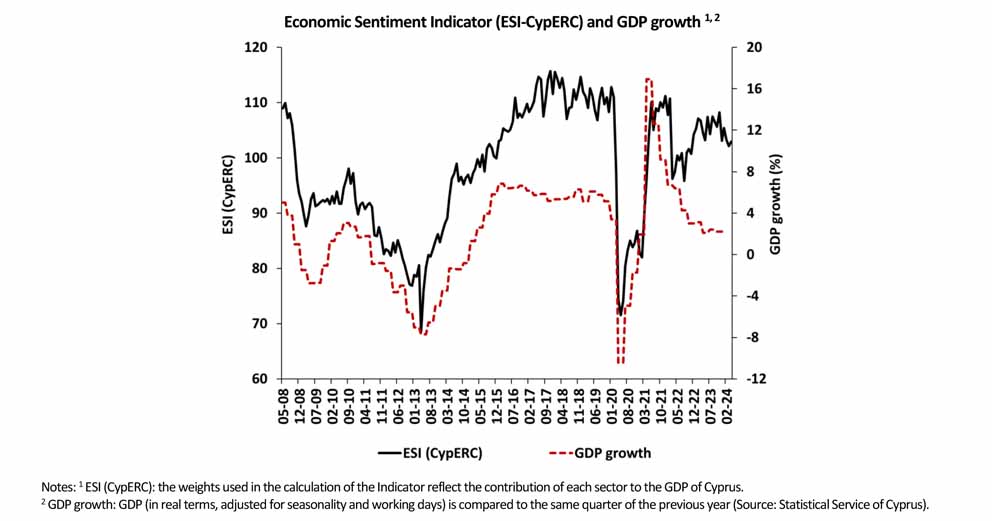
The University of Cyprus Economic Sentiment Indicator (ESI-CypERC) increased by 0.8 points in April compared to March, driven by gains in business confidence in all sectors.
The University of Cyprus Economic Sentiment Indicator (ESI-CypERC) increased by 0.8 points in April compared to March, driven by gains in business confidence in all sectors.

– The UAE has introduced a federal corporate tax to strengthen its economic future.
– The tax policy aligns with international standards and aims to solidify the UAE’s position as a global financial center.
– Corporate tax rates are set at 0% for annual incomes up to AED375,000 and 9% beyond that threshold.
– The UAE is committed to sustainable development goals and has reformed tax policies to support economic growth and inclusivity.
– The UAE has joined the BEPS programme and supports global tax fairness initiatives.
– Regulatory decisions have been made to guide the implementation of the corporate tax law in the UAE.
– The Ministry of Finance is conducting public awareness sessions to ensure understanding of the new tax law.

The 50 largest property deals in Cyprus in March totaled over €78 million. The top sale was a €28 million office complex in Germasogeia. Limassol had the most sales in the top 10, totaling €36.1 million, followed by Nicosia and Paphos with €4.2 million each, and Larnaca with €3.7 million.

In April 2024, the Economic Sentiment Index (ESI) increased by 0.8 units compared to March 2024. The rise in ESI was driven by a stronger business climate in the manufacturing and construction sectors. Retail trade also saw a slight increase in climate due to more positive assessments of inventory levels and sales expectations. However, consumer sentiment declined in April, with consumers feeling more pessimistic about the future economic situation. Additionally, the Economic Uncertainty Index increased slightly in April, mainly due to greater uncertainty among businesses in the services and retail trade sectors.

President Joe Biden stated that if he is reelected, he will allow former President Donald Trump’s comprehensive tax cuts to expire without renewing them.

By end-February 2024, the government had accumulated cash deposits of over €3.5 billion at the Central Bank and €2.1 billion at commercial banks.

Virginijus Sinkevičius, the European Commissioner for the Environment, Oceans, and Fisheries, emphasizes the importance of addressing climate change and environmental protection. Cyprus, due to its geographical position, is expected to be significantly impacted by climate change, especially in sectors like agriculture, tourism, and fisheries. Sinkevičius highlights the need for all Member States, including Cyprus, to implement climate targets to mitigate these effects. Additionally, he stresses the importance of implementing provisions for Natura2000 areas to ensure ecosystems can withstand increasing pressures, warning that Cyprus may end up in the European Court over Natura2000 issues if necessary actions are not taken.

The European Parliament passed the EU Artificial Intelligence Act in April, setting a global precedent for regulating AI. The legislation aims to protect fundamental rights, democracy, and environmental sustainability from high-risk AI systems while fostering innovation. The regulation will become EU law once ratified by the European Council, with full implementation expected within 24 months. It does not regulate the technology itself but focuses on the risks posed by AI systems. The regulation categorizes AI systems based on risk levels, with strict rules for high-risk systems. Other countries are expected to follow the EU’s lead in regulating AI. The regulation is designed to adapt continuously to keep pace with technology advancements. Technology companies may raise objections, but the legislation sets strict penalties to ensure compliance. The regulation is not expected to hold back the EU from technological development or innovation.

The processes for licensing and supervision of credit managers are becoming stricter, with new legislation being introduced to harmonize national law with European directives. Credit managers must be licensed by their member state of origin before starting their activities, meeting specific conditions such as robust governance and protection rules for borrowers. Buyers will not be licensed, except for those managing their own portfolios. Credit buyers will be supervised by the Central Bank and subject to penalties for any violations. Companies in the debt acquisition sector will be automatically recognized as licensed credit managers. The bills also ensure consumer protection, including timely information on credit agreement changes and the right to raise defenses against loan buyers.
