Wood: building on an abundant natural resource

Wood: building on an abundant natural resource

Forests in the EU can contribute to greening the European construction industry and support architectural improvements. In the Gironde department of France, a secondary school was built in 2022 using wood from local pine trees, aiming to utilize wood from nearby forests while preserving them. This project is part of the BASAJAUN research initiative, funded by the EU, which promotes the use of wood as a versatile and recyclable material. The initiative’s flagship is a wooden apartment building near the Pian-Médoc school, designed to demonstrate sustainable forest management and the potential for greening the construction industry. The building, made from non-local wood, features a disassemblable facade and uses natural wood fibre for insulation, highlighting the environmental benefits of using wood in construction. BASAJAUN aligns with the European Green Deal’s goals and the New European Bauhaus initiative, emphasizing sustainability, aesthetics, and inclusion in architecture. Buildings in the EU account for significant energy consumption and greenhouse gas emissions, with traditional materials like concrete and steel being energy-intensive. Using wood in construction can reduce the carbon footprint and even turn buildings into carbon sinks. The EU aims to ensure sustainable sourcing of wood to support biodiversity, ecosystems, and local communities. The potential carbon storage of new residential wood buildings in the EU is significant, and bio-based materials, including wood, currently represent a small fraction of building materials used in Europe. BASAJAUN has partners across 11 EU countries and has developed a system for digitally tracking wooden materials in construction. Another EU-funded project, WOODCIRCLES, focuses on recycling wood waste, aiming to address the challenge of its variable quality and promote the reuse of wood in a sustainable manner.

Turkey central bank stuns market with 500-point rate hike to 50%

Turkey central bank stuns market with 500-point rate hike to 50%

Turkey’s central bank raised interest rates by 500 basis points to 50% due to a deteriorating inflation outlook and may tighten further if inflation worsens significantly and persistently. This decision, seen as a demonstration of the central bank’s independence, occurred 10 days before nationwide local elections. Following the rate hike, the lira appreciated by up to 1.5% against the dollar, and Turkey’s dollar bonds rallied. Since last June, the central bank has increased the key one-week repo rate by 4,150 basis points from 8.5%, following a shift towards more orthodox economic policies after President Tayyip Erdogan’s election victory in May. The central bank also adjusted its policy operational framework, setting the overnight borrowing and lending rates 300 basis points below and above the repo rate. Inflation in Turkey rose to 67% last month, higher than expected, despite a series of rate hikes since June. A Reuters poll showed that while most respondents expected the rate to remain steady in March, a majority anticipated further hikes later in the year. The central bank has also taken steps to tighten credit, including adjusting reserve requirements and raising the maximum rate on credit card cash withdrawals. Tighter fiscal policy is expected after the upcoming elections, which could increase credit costs and exacerbate the cost-of-living crisis in Turkey.

Czech farmers dump manure on Prague streets in renewed protests [PHOTOS]

Czech farmers dump manure on Prague streets in renewed protests [PHOTOS]

Czech farmers protested in front of the government’s office in Prague, demanding more support and a halt to cheap imports to the European Union. They blocked streets with tractors, dumped manure in front of government headquarters, and called for the removal of restrictions from the Green Deal plan and for customs duties on Ukrainian farm products to be reimposed. This protest is part of a wider movement across the EU, with similar actions in Poland and Brussels. The Czech farmers’ demands include subsidies matching 2022 levels, employment support programs, reduced property tax for farmland, and measures to tackle surplus in EU markets due to cheap imports. The government has refused to be pressured, with Prime Minister Petr Fiala calling it “blackmail” and Agriculture Minister Marek Vyborny criticizing the manure dumping.

Gaza truce talks expected as offensive and aid crisis rage on

Gaza truce talks expected as offensive and aid crisis rage on

Mediators are expected to reconvene in Cairo to find a ceasefire formula acceptable to Israel and Hamas for Gaza. Foreign governments have conducted airdrops to aid civilians in Gaza. Israeli and Hamas delegations are expected in Cairo, but Israel wants a list of alive hostages before sending a delegation. A framework for a six-week pause in fighting, agreed upon by Israel, now depends on Hamas releasing hostages. The U.S. has called for more aid into Gaza, which Israel denies restricting. The U.S. military airdropped 38,000 meals over Gaza. Israel disputes the death toll from a food convoy catastrophe, attributing most deaths to being trampled or run over. Since October 7, when Hamas attacked, killing 1,200 and abducting 253, over 30,000 have been killed in Gaza, and tens of thousands injured. Fighting continued around Khan Younis and Rafah, with significant casualties reported. Hamas insists a temporary truce must lead to ending the war, with assurances given for negotiating a permanent ceasefire in later phases.

Navalny to be buried on Friday, wife fears possible arrests

Navalny to be buried on Friday, wife fears possible arrests

Alexei Navalny’s funeral service and burial are scheduled to take place in Moscow on Friday, as announced by his spokesperson, Kira Yarmysh. The service will be held at 2 p.m. (1100 GMT) in the Church of the Icon of the Mother of God in the Moscow district of Maryino, where Navalny used to live. Following the service, Navalny will be buried at the Borisovskoye cemetery, located on the opposite side of the Moskva River to the south. Navalny died at an Arctic penal colony on February 16, at the age of 47. His death certificate stated he died of natural causes, but his allies accuse President Vladimir Putin of having him murdered. The Kremlin has denied state involvement in his death. Navalny’s allies attempted to organize a larger event for his farewell but faced obstacles, including being refused a hall for the ceremony. They initially planned the farewell and funeral for February 29, but claimed they encountered resistance from authorities.

Navalny to be buried on Friday

Navalny to be buried on Friday

Russian opposition politician Alexei Navalny’s funeral service and burial are scheduled to take place in Moscow on Friday, as announced by his spokesperson, Kira Yarmysh. The service will be held at 1400 Moscow time (1100 GMT) in the Church of the Icon of the Mother of God in the Moscow district of Maryino, where Navalny used to live. Navalny will then be buried at the Borisovskoye cemetery, located on the other side of the Moskva River to the south. Navalny died at an Arctic penal colony on Feb. 16. His death certificate stated he died of natural causes.

Farmers, ’ anger spreads in Europe, governments promise help

Farmers, ’ anger spreads in Europe, governments promise help

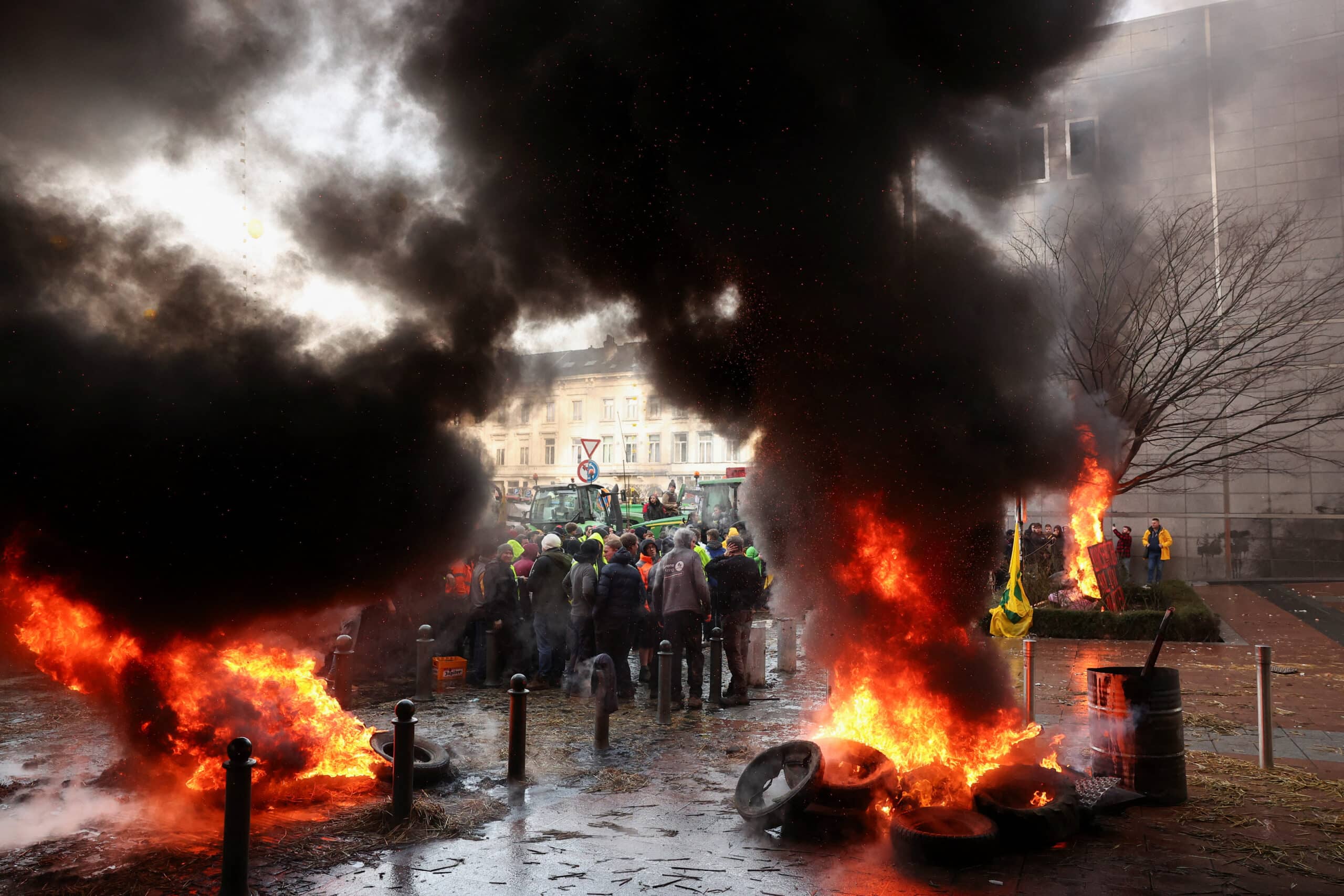
Farmers protested at the European Parliament in Brussels, demanding EU leaders address their concerns about taxes and rising costs. They threw eggs and stones, started fires, and set off fireworks. The protest included farmers from Italy, Spain, and other European countries and coincided with an EU summit. The farmers are also upset about green regulations and cheap imports. Protests were held in various European countries, including Portugal, Greece, and Germany, highlighting tensions over the EU’s climate change policies.

Spanish farmer Jose Maria Castilla, representing Asaja, criticized the European Commission’s regulations. French Prime Minister Gabriel Attal announced measures to support farmers, such as banning cheap imports of products using pesticides forbidden in Europe and ensuring clear labeling of imported food. The European Commission proposed limiting farm imports from Ukraine and relaxing some environmental rules.

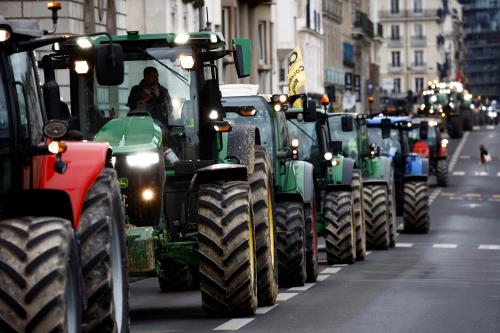
The farmers’ crisis was not officially on the EU summit agenda, which focused on aid to Ukraine, but was expected to be discussed. Police used tear gas and water hoses against farmers trying to tear down barriers near the summit. Approximately 1,300 tractors blocked major roads in Brussels, and a statue was damaged. Protests also occurred in Portugal, France, and Greece, with slogans like “No farmers, no food, no future.” Belgian Prime Minister Alexander De Croo and Irish Prime Minister Leo Varadkar expressed the need to address farmers’ grievances, with Varadkar opposing a trade deal with Mercosur. Hungarian Prime Minister Viktor Orban met with farmers and emphasized the need for new leadership representing the people’s interests ahead of the European Parliament elections.

Tractors lay siege to Brussels – The Summit and the Commission's proposal

Tractors lay siege to Brussels – The Summit and the Commission's proposal

Although the rural issue is not officially included in the agenda, it is certain that it will be discussed. European leaders are expected to meet in Brussels to discuss the revision of the Multiannual Financial Framework (MFF) for the period 2021-2027, which includes vital macroeconomic financial assistance for Ukraine amounting to 50 billion euros. The European Commission has proposed measures to restrict imports of agricultural products from Ukraine and allow farmers to deviate from certain community rules for a year. The issue of rural mobilizations has been added to the agenda of the Summit, as hundreds of tractors are expected to flood Brussels and paralyze the European capital. Farmers from Spain, Italy, and Portugal have joined Belgian farmers in a large-scale demonstration in Brussels to protest against European policies, complex environmental regulations, unfair competition from abroad, and low incomes. The protests are expected to last at least until 5:00 pm and may continue the following day if their demands are not met. The police authorities of Brussels have warned of serious traffic problems and advised residents to avoid using cars and prefer the metro for transportation. The European leaders are also expected to discuss the urgent need to accelerate the delivery of ammunition and missiles to Ukraine.

IBM told to fix e-Justice after system collapse

IBM told to fix e-Justice after system collapse

The e-justice platform in Cyprus, which is meant to digitize the electronic submission of documents for courts and allow access by state agencies, collapsed shortly after its launch due to glitches. The government’s IT and digital services agency has warned IBM, the contractor responsible for the platform, to fix the issues within five working days or risk losing the contract. The glitches include functional problems, performance issues, and a failure of the payment system. Lawyers have staged protests and strikes in response to the system’s failure, arguing that it will further delay the already slow justice system. The Bar Association has called the situation unacceptable and has planned further demonstrations. Some users have reported difficulties finding their cases and have raised concerns about data security. Despite calls to revert to manual registration, the Deputy Minister of Innovation has stated that shutting down the system without exploring repair solutions would be irresponsible. The e-justice platform was intended to replace the previous i-Justice system and was planned to be implemented in three stages.