Explainer: When is the UK election?
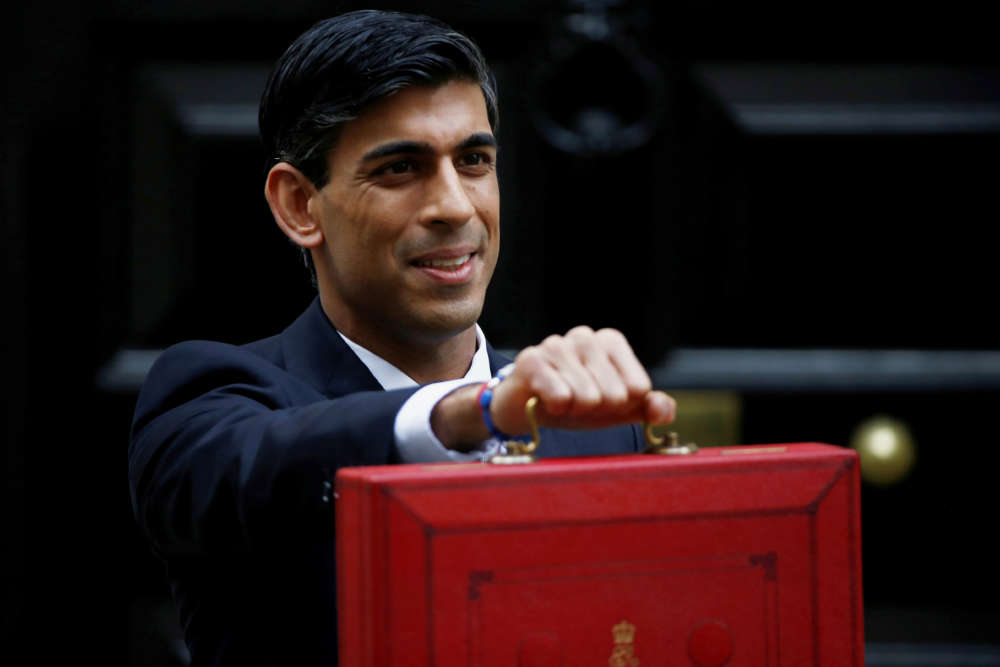
Explainer: When is the UK election?

– The last possible date for Britain’s next general election is January 28, 2025.
– Prime Minister Rishi Sunak indicated that 2024 would be an election year.
– Sunak’s working assumption is for a general election in the second half of this year.
– Sunak ruled out holding an election on May 2 and is unlikely to choose any day in May due to logistical difficulties.
– Expectations are for a vote in October or November.
– The decision to call a general election is made by the Prime Minister unless the government loses a motion of no confidence in parliament.
– Upon calling an election, parliament is dissolved, and all lawmakers lose their seats, with a 25 working day period until the general election.
– Elections have been held on a Thursday since 1935.
– Parliament will automatically dissolve on December 17 if an election is not called before then.
– 650 constituencies elect MPs under a first-past-the-post system.
– If a party wins more than 325 MPs, King Charles will invite its leader to form a government.
– If no party achieves a majority, there might be a coalition government or a minority government.
– The Conservative Party has governed in coalition and as a minority government in the past.
– Currently, the Conservatives have a majority, but polls show the Labour Party leading by about 20 percentage points.

Bank of England set to play for time before first rate cut

Bank of England set to play for time before first rate cut

The Bank of England is expected to maintain uncertainty about when it will start reducing interest rates, awaiting clearer evidence that inflation pressures are diminishing. Despite other central banks moving towards cutting borrowing costs post-COVID pandemic and inflation projected to decrease to the 2% target soon, the BoE has labeled its high rates as “under review.” Governor Andrew Bailey expressed a cautiously optimistic outlook, noting inflation expectations appear controlled and concerns over a price-wage spiral are lessening. However, Bailey indicated no rush to lower the Bank Rate from its 16-year peak of 5.25%, citing labor market data uncertainties and geopolitical risks. In February, the decision to keep the Bank Rate steady was supported by six rate-setters, with two advocating for an increase and one for a reduction. Analysts anticipate a similar 6-2-1 vote split in the next decision, potentially influenced by upcoming inflation data. The BoE forecasts inflation to slow to 2% in the second quarter following a decrease in regulated energy costs but expects a rise to almost 3% later in 2024. Inflation reached a high of 11.1% in October 2022. The central bank remains concerned about the risk posed by fast-growing wages, with Britain’s minimum wage set to increase by nearly 10% and employers offering pay settlements of about 5% since the start of 2024. Former BoE deputy governor Charlie Bean highlighted that Britain’s pay growth is roughly double the level consistent with 2% inflation. The BoE is seen as moving more slowly towards rate cuts compared to other central banks, with the British economy showing signs of recovery from a short recession. Finance minister Jeremy Hunt announced tax cuts to moderately boost consumers. The European Central Bank and the US Federal Reserve are contemplating rate cuts, potentially placing the BoE behind. Economists at HSBC predict inflation could drop to as low as 1.2% in May and June before rising later in the year, challenging the BoE’s communication on maintaining its current stance. A Reuters poll shows economists mostly expect rate cuts to begin in the third quarter, with 40% anticipating a move in the second quarter. Investors do not fully expect a quarter-point cut until August. The BoE’s March monetary policy decision will be announced without a press conference, as no new economic forecasts are due to be published.

Algorand sets stage for March token unlock while Chainlink AI challenger receives significant support

Algorand sets stage for March token unlock while Chainlink AI challenger receives significant support

– Algorand (ALGO) will release 2.29 million tokens daily for 31 days starting March 19, 2024.
– InQubeta (QUBE) is an Ethereum-powered crowdfunding platform for AI projects, having raised over .6 million in its ICO.
– QUBE token allows owners voting privileges in governance decisions.
– InQubeta plans to launch a staking dApp and aims for QUBE token exchange listings in the near future.
– Algorand has announced leveraging Dynamic Lambda and Native Python, and operates over 1400 nodes.
– Chainlink is launching a developer boot camp starting April 1, covering Web 3.0 basics in multiple languages.
– The growth of Algorand, Chainlink, and InQubeta has attracted significant attention in the cryptocurrency community.

UK PM Rishi Sunak rules out holding an election in early May

UK PM Rishi Sunak rules out holding an election in early May

British Prime Minister Rishi Sunak announced he would not hold a general election in early May, indicating the vote would likely occur later in the year. This statement aims to quell speculation about an early election, despite opposition parties urging for one. Sunak confirmed there would be no election on May 2, the same day as local elections, due to logistical challenges of organizing two elections close together. Despite facing political challenges, including a party defection and controversy over donor funds, Sunak has previously suggested the election could happen in the latter half of the year. Current polls show Sunak’s Conservative Party trailing behind the Labour Party by approximately 20 percentage points. The government has faced difficulties in fulfilling its main promises, but Sunak has achieved the goal of halving inflation by the end of 2023. A general election must be held by January next year, but Sunak has the discretion to call one sooner.

Cyprus to open polling stations abroad for EU elections

Cyprus to open polling stations abroad for EU elections

Cyprus will open polling stations in Greece, Belgium, and the United Kingdom for the European Parliament elections in June. Cypriots living in these countries can vote there if they register before April 2. A polling station will be established in any location where at least 50 voters submit a declaration requesting one. Voter registration for both local government and European Parliament elections is open until April 2, with the elections scheduled for June 9. In Cyprus, citizens of the Republic of Cyprus and EU citizens residing in Cyprus who are over 18 years old on election day (born on or after June 9, 2006) are eligible to vote. Voters aged 25 and over can register online, while paper applications are available at various local offices and can also be downloaded from the Electoral Service’s website.

UK will change law to ban foreign states from owning newspapers

UK will change law to ban foreign states from owning newspapers

Britain’s government plans to prevent foreign states from owning newspapers, potentially blocking Abu Dhabi-backed RedBird IMI’s bid to buy the Telegraph. The proposed legislation amendment aims to stop newspaper and periodical news magazine mergers involving foreign state ownership, influence, or control. This move is in response to concerns over the independence of the media and foreign investors acquiring politically influential assets. The Telegraph, known for its connections with the Conservative Party, is at the center of this political struggle for ownership. The government’s plan includes referring relevant media mergers to the Competition and Markets Authority (CMA) for assessment of foreign state involvement, with the authority to block or unwind mergers based on the findings.

House to vote on expansion of pre-primary education

House to vote on expansion of pre-primary education

The Cyprus Parliament is expected to vote next week on a bill to expand free and compulsory pre-primary education to include children aged four years old and above. This follows a letter from Education Minister Athena Michaelidou to the House Education committee, urging them to advance the matter. The committee, led by Diko MP Pavlos Mylonas, discussed the initiative, which aims to address issues within the education sector through collaboration between relevant ministries and deputy ministries. Support for the bill was expressed by MPs, highlighting its potential benefits for low-income families and the necessity of the reform. Concerns were raised about the need for proper consultation and the impact on nursery schools, with a meeting planned between the Education ministry, the Social welfare deputy ministry, and the private preschools association (Sipek) to discuss these issues. The government plans to gradually lower the age of acceptance into nursery schools to four years old over the next few years.