The riches in Europe, ’s mountains of metals waste

Fact: Waste from the production of aluminium, nickel, and other industrial materials offers the EU an opportunity to advance its recycling goals.
Fact: Waste from the production of aluminium, nickel, and other industrial materials offers the EU an opportunity to advance its recycling goals.

The author, Don Wooten, reflects on his attitude towards paying taxes and the importance of contributing to society through taxes. He mentions his belief that taxes are necessary for the common good and expresses a willingness to pay them, despite some frustrations with how tax money is sometimes used.

– The 2023 budget proposed a refundable ITC for clean electricity, equal to 15% of the capital cost of eligible property.
– The 2024 budget provides the design and implementation details of the ITC, including the eligibility criteria.
– The ITC will be available only to eligible Canadian corporations, including taxable Canadian corporations, provincial and territorial Crown corporations, and corporations owned by municipalities or Indigenous communities.
– Property eligible for the ITC includes equipment used to generate electricity from various sources, including solar, wind, water, nuclear fission, geothermal energy, and specified waste materials.
– The ITC will be subject to potential repayment obligations if the property is converted to an ineligible use, exported from Canada, or disposed of.
– The EV Supply Chain Investment Tax Credit is equal to 10% of the cost of buildings used in electric vehicle supply chain segments.
– The Clean Technology Manufacturing Investment Tax Credit has been updated to include production of qualifying minerals at polymetallic projects.
– An accelerated CCA of 10% is provided for new eligible purpose-built rental projects that begin construction after April 15, 2024.
– Immediate expensing is provided for certain productivity-enhancing assets acquired after April 15, 2024.
– The budget proposes to extend an exemption for certain interest and financing expenses relating to arm’s length financing used to build or acquire purpose-built rental housing.
– The government is considering introducing a new tax on residentially zoned vacant land to spur development.
– The government intends to restrict the acquisition of existing single-family homes by very large corporate investors.
– The government is exploring measures to expand access to alternative financing products for home purchasers, such as halal mortgages.
– Amendments are proposed to the CRA’s information gathering provisions to enhance tax audits and facilitate the collection of tax revenues.
– The budget proposes to remove the tax-indifferent investor exception to the anti-avoidance rule for synthetic equity arrangements.
– Specific amendments are proposed to preclude a corporation from qualifying as a mutual fund corporation if it is controlled by or for the benefit of a corporate group.
– The budget introduces the Canada Carbon Rebate for Small Business, to return a portion of the federal backstop pollution pricing fuel charge proceeds collected from a province to CCPCs with less than 500 employees.
– The budget proposes measures to address tax debt avoidance planning, including joint and several liability for taxpayers who participate in such planning.
– The budget proposes to remove the failure to file an information return in respect of a reportable or notifiable transaction under the mandatory disclosure rules from the general penalty provision.
– The budget proposes to repeal the exception to the debt forgiveness rules for bankrupt corporations and the loss restriction rule applicable to bankrupt corporations.
– The government launched consultations on the existing SR&ED tax incentives and announces a second phase of consultations to focus on specific policy parameters.
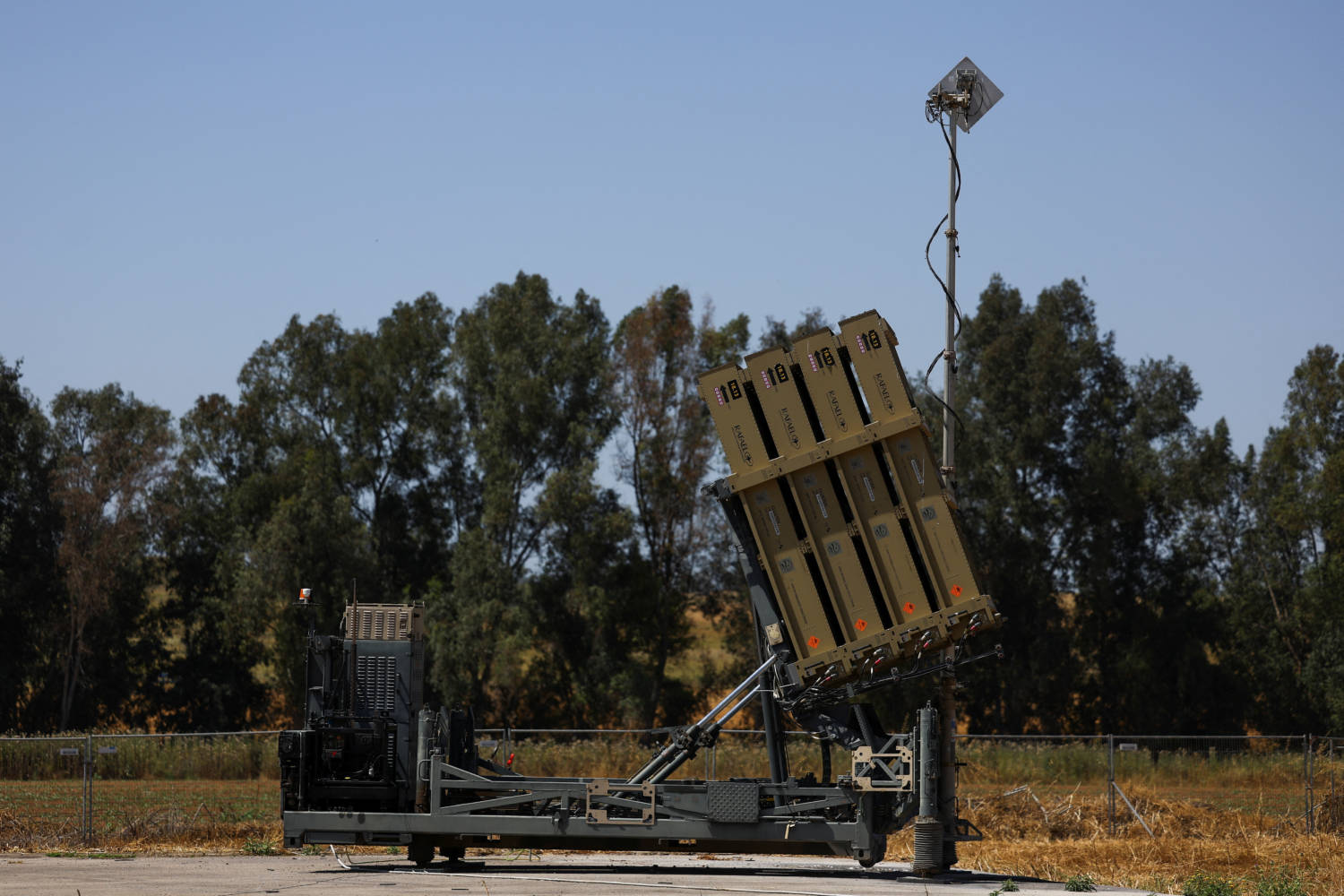
Iran’s aging air defenses make the country vulnerable to an Israeli attack, despite its strong ballistic missiles and drones. Israel’s formidable defense systems have the capability to hit targets inside Iran due to its obsolete air force and aging Russian-based air defense systems. Israel’s main challenge would be successfully striking military bases in western and southern Iran, requiring the use of penetrating bombs. The cost of repelling Iran’s attack could be significantly higher than the cost of the attack itself. Israel is working to replenish its air defense systems in preparation for potential future attacks. Israel is unlikely to rely solely on defense and may respond with significant offensive options if attacked by Iran.

The Ontario budget included an extra 0 million for the Invest Ontario Fund to give more funds to large businesses. Ontario has overtaken Quebec as the biggest champion of taxpayer-funded subsidies, spending an average of .1 billion a year on corporate handouts since 2018. The author argues that cutting corporate taxes and eliminating corporate welfare would attract more businesses to Ontario and stimulate economic growth.

LG Group will invest 100 trillion won (.42 billion) within South Korea over the next five years, with half of the investment allocated to future technologies such as artificial intelligence, environmentally clean technology, batteries, auto parts, and next-generation displays.

Nissan Motor plans to launch 30 new models over the next three years and aims to raise its global sales by 1 million vehicles while cutting costs to improve profitability.

Most US recreational vehicles are produced in Elkhart, Indiana, while the Bowlus, a luxury travel trailer, is made in Oxnard, California. The Bowlus is designed to be towed by a Porsche sports car and features a 1930s design with a minimalist interior. Its top-end model costs 0,000. Demand for the Bowlus increased during the COVID-19 pandemic, and the company is now expanding by offering a lower-priced version and selling through dealerships. Bowlus trailers are handcrafted by 35 workers and the company plans to produce 100 trailers this year. The Bowlus was originally designed by a Los Angeles aerospace engineer during the Great Depression and uses a monocoque structural system, making it light but strong. Other companies are also developing luxury and battery-powered trailers, such as Aero Build and Pebble, with prices ranging from 9,000 to 9,900.

India announced a reduction in import taxes on certain electric vehicles (EVs) for carmakers committing to a 0 million investment and starting domestic manufacturing within three years. This policy aims to increase competition in India’s car market, targeting a rise in EV sales from 2% to 30% by 2030. Tata Motors plans to expand its EV portfolio to 10 models in the next 3-4 years, aiming for EVs to constitute 25% of its total car sales by 2025. Mahindra and Mahindra anticipate electric models will account for 20%-30% of its SUV sales by March 2027. Hyundai Motor India intends to introduce five EV models by 2032 and increase its charging stations to 439 by 2027. Maruti Suzuki India plans to launch six EV models by 2030, with its first battery EV expected by the end of 2024. JSW Group announced a 400 billion rupee investment in EV and battery manufacturing in Odisha and is discussing technology and component supply with Volkswagen.

Mercedes-Benz has revised its electric vehicle (EV) demand expectations, now anticipating that electrified vehicles, including hybrids, will make up to 50% of its sales by 2030. This adjustment marks a significant shift from its earlier goal of preparing for all-electric sales by the same year, contingent on favorable market conditions. CEO Ola Kaellenius highlighted challenges such as inadequate charging infrastructure and a lack of appealing electric models as reasons for the slower transition to EVs. Consequently, Mercedes-Benz plans to continue producing combustion engine cars and update its technology into the next decade, with a refreshed lineup expected in 2027. Following this announcement, the company’s shares increased by 5.9%, further buoyed by a 3 billion euro share buyback program. Despite the automotive industry’s investment in EVs, actual demand has not met expectations, leading to increased cost-cutting pressures. Mercedes-Benz also cited slower economic growth, supply chain issues, and geopolitical tensions as factors affecting its 2024 outlook, predicting lower sales returns. For 2023, the company reported an adjusted return on sales of 12.6% in its car division, meeting its forecast despite inflation and supply chain challenges. However, it anticipates a lower adjusted return of 10-12% for cars and 12-14% for vans in 2024. Additionally, Mercedes-Benz raised its average vehicle price to 74,200 euros and increased its research and development spending, particularly on its MB.OS platform. Group earnings before interest and taxes decreased to 19.7 billion euros from 20.5 billion euros the previous year, even as revenue rose by 2%.