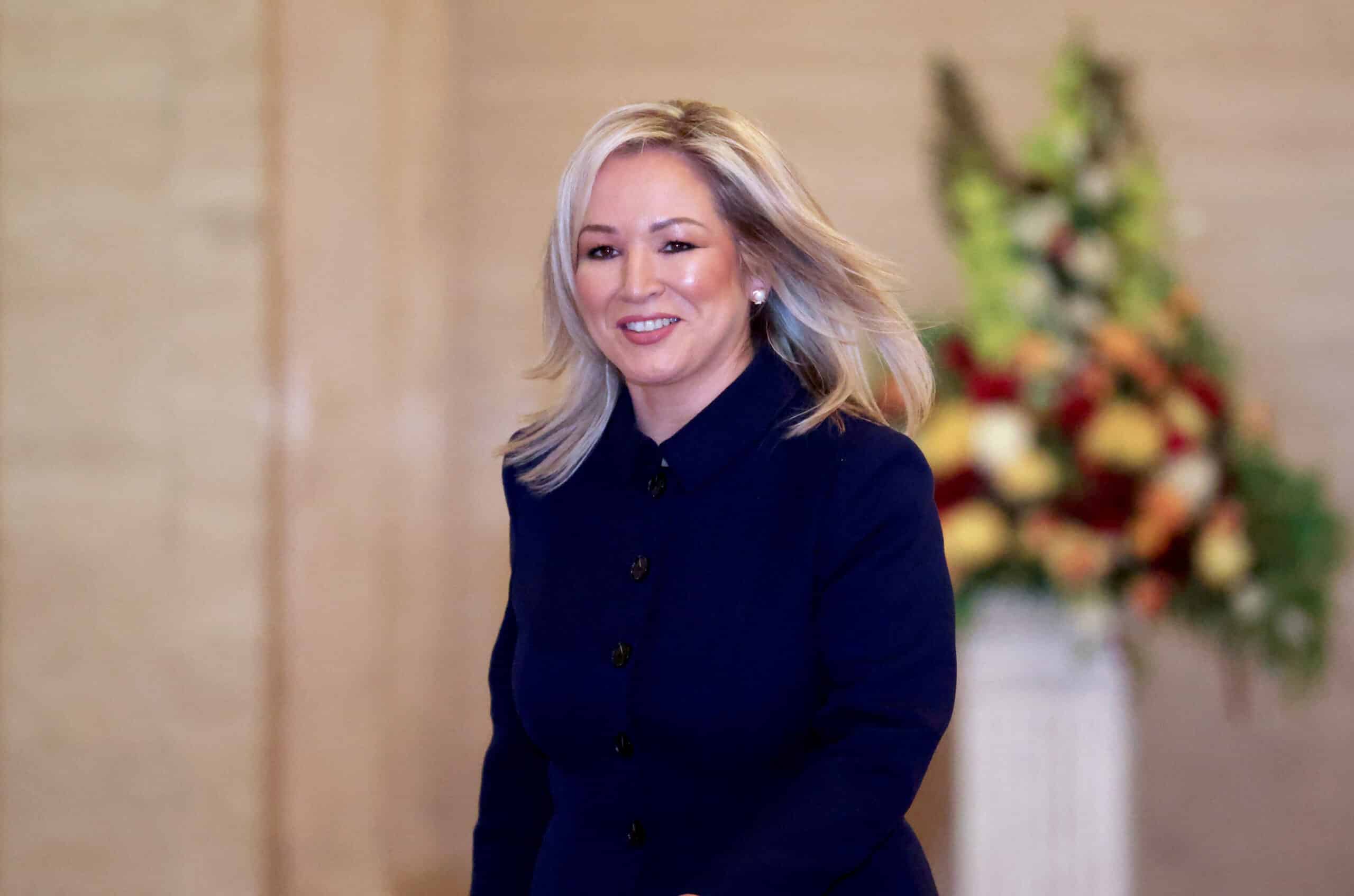
Northern Ireland’s parliament appointed Michelle O’Neill, an Irish nationalist, as First Minister for the first time. This event marks a historic milestone in a state that was established a century ago with a pro-British unionist majority. O’Neill’s appointment follows the 2022 election and signifies the rise of the Sinn Fein party, which aspires to see a united Ireland. Sinn Fein’s pro-British rival, the Democratic Unionist Party (DUP), ended a two-year boycott of the power-sharing government after reaching a deal with the British government to ease trade issues.
Michelle O’Neill, at the age of 47, pledged to serve all citizens equally. She and Sinn Fein President Mary Lou McDonald represent a new generation of Sinn Fein politicians who were not directly involved in the region’s past conflicts. Sinn Fein, once the political wing of the Irish Republican Army (IRA), is now the most popular party in the Irish Republic, with elections due the following year.
The DUP’s Emma Little-Pengelly will take the post of deputy First Minister, which holds equal power but less symbolic weight. Despite the focus on unity, Northern Ireland’s politicians face pressure to address domestic issues after a two-year hiatus affected public services. A referendum on Irish unity is at the discretion of the British government, and polls show a majority in favor of remaining part of the United Kingdom.
The frequent suspensions of the power-sharing government, established under the 1998 Good Friday Agreement, have led to calls for reform. The Irish and British prime ministers are open to considering changes to the political system. The general public in Belfast, as expressed by lawyer Tara Walsh, desires change.