Frederick University to host lecture by ITF, ’s Stephen Cotton
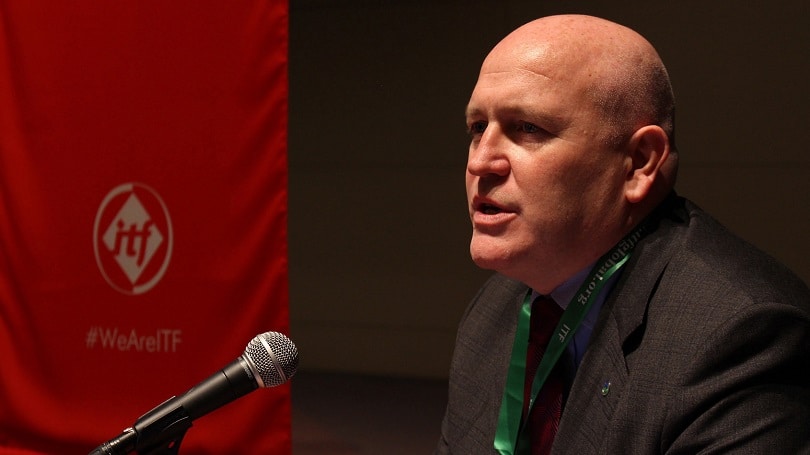
Frederick University to host lecture by ITF, ’s Stephen Cotton

Frederick University will host a lecture by Stephen Cotton, the General Secretary of the International Transport Workers Federation (ITF), on March 28, from 6.15-7.45pm, at the University’s Limassol campus. The lecture will focus on the ITF’s mission to protect the rights of transport workers worldwide and the importance of the global labour movement to the world’s seafarers. The ITF is a global union federation representing over 18 million transport workers in 150 countries across various sectors including maritime, port, aviation, road, rail, and urban transport. The event is co-organised by the Department of Maritime Transport and Commerce and Department of Law, and is open to the public and stakeholders in the maritime industry. Stephen Cotton was elected as General Secretary of the ITF in 2014 and re-elected in 2018. He has led the ITF to become a proactive campaigning organisation and holds positions in other significant organizations, including the ITF Seafarers’ Trust and the United Seaman’s Service (USS) governing body. In 2021, he was appointed as a Member of the Board of the UN Global Compact and chaired the Council of Global Unions (CGU) between 2019 and 2023. He received the USS Admiral of the Ocean Sea (AOTOS) Award in 2014.

Technocratic level talks continue on EU-Turkey relations

Technocratic level talks continue on EU-Turkey relations

– Consultations at a technocratic level with Germany regarding a possible reference text on EU-Turkish relations are underway, aiming for inclusion in the conclusions of an upcoming EU summit.
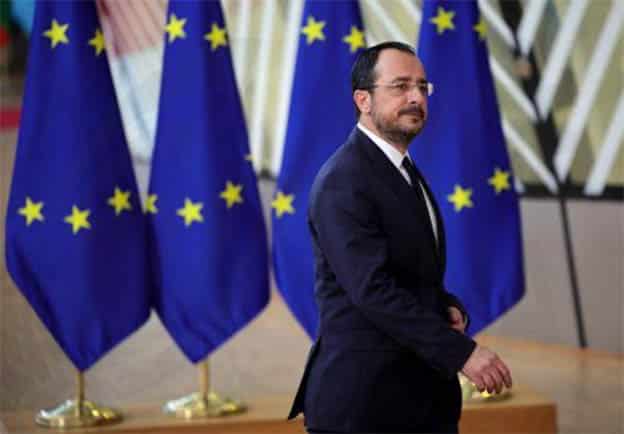
– President Nikos Christodoulides made these statements upon his arrival at the European Council.
– Christodoulides welcomed the inclusion of a reference to the Cypriot initiative for a maritime corridor to Gaza in the conclusions on the Middle East.
– He discussed specific next steps on the Cyprus issue with UN Secretary-General, António Guterres, expressing hope for developments by April towards resuming talks.
– Ongoing discussions follow Germany’s proposal to include a paragraph on EU-Turkey relations in the summit conclusions.
– Christodoulides had meetings with the Chancellor of Germany and the President of the Council, followed by consultations at a technocratic level.
– He emphasized the importance of positive developments in EU-Turkish relations that also involve Cyprus, advocating for a step-by-step approach with an enhanced role for the European Union.
– Other member states, including France, have shown interest in the consultations regarding EU-Turkey relations and Cyprus.
– The Cypriot initiative for a humanitarian corridor to Gaza was praised by all heads of states at the European Council, highlighting Cyprus’s role in the region.
– Christodoulides had a productive meeting with the UN Secretary-General, discussing the next steps on the Cyprus issue and hoping for developments within April.
– He expressed satisfaction with the European Council’s conclusions on security and defence, including the announcement of appointing a Commissioner for Defence in case of the current President of the Commission’s re-election, emphasizing the importance of advancing in defence and security matters for the EU’s strategic autonomy.

President optimistic for Gaza humanitarian aid progress

President optimistic for Gaza humanitarian aid progress

President Christodoulides is optimistic about the outcomes of the European Council summit, focusing on a ceasefire in Gaza and increasing humanitarian assistance. UN Secretary-General Antonio Guterres supports Cyprus’s “Amalthea” humanitarian corridor initiative. A conference in Cyprus, attended by 36 states including 23 EU countries, all G7 nations, and the United Nations, discussed technical details of the initiative and a fund to increase humanitarian aid to Gaza. The Netherlands will contribute €10 million, and the EU will initially donate around €70 million to this fund. President Christodoulides plans to meet with the UN Secretary-General to discuss Cyprus’s initiative and the Cyprus problem. He emphasizes the EU’s role in resuming negotiations with Turkey and affirms Cyprus’s readiness to prepare a second ship for the humanitarian corridor, which complements other corridors. Cyprus seeks positive outcomes and references to Euro-Turkish relations based on developments in the Cyprus problem.

Cypriots can, ’t get rid of the blues

Cypriots can, ’t get rid of the blues

– Cyprus ranked 50th in the World Happiness Report, falling four spots from the previous year.
– The report covers 143 countries and notes Cyprus’s decline in happiness rankings over the past two years, from a high of 41st place.
– According to the report, younger people in Cyprus (under 30s) rank 51st in happiness, while those over 60 rank 57th.
– Finland is ranked as the happiest country for the fourth consecutive year, followed by Denmark, Iceland, and Sweden.
– Cyprus ranks higher in happiness than neighboring countries Greece (64th) and Turkey (98th).
– Afghanistan is ranked as the least happy country, with Lebanon, Lesotho, Sierra Leone, and the Congo also in the bottom five.

UN says Russia consolidates control of occupied Ukraine with , ‘climate of fear’

UN says Russia consolidates control of occupied Ukraine with , ‘climate of fear’

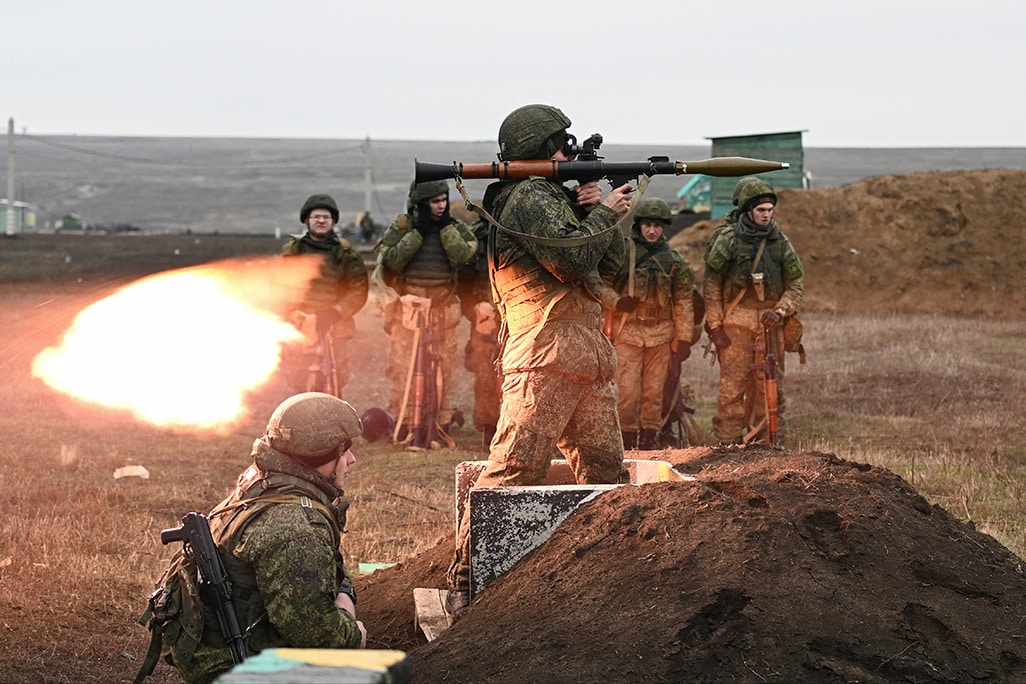
Russia is consolidating control over occupied Ukrainian territory through arbitrary detention, killings, and torture, creating a climate of fear. The U.N. Human Rights Monitoring Mission in Ukraine (HRMMU) reported on rights breaches by Russia, including censorship, surveillance, political oppression, repression of free speech, and movement restrictions. Russia denies committing atrocities or deliberately attacking civilians, calling its actions a “special military operation.” Russia controls over 17% of Ukraine’s territory, affecting several million people. The HRMMU’s findings are based on interviews with over 2,300 individuals. Initial rights violations involved killings, torture, and arbitrary detention, targeting those linked to Ukrainian security forces or supportive of Ukraine. This was followed by restrictions on movement, assembly, and expression, and efforts to replace Ukrainian state institutions with Russian ones, violating international humanitarian law. Schools were forced to adopt the Russian language and curriculum, and the justice system jailed people in Russian prisons. Civil servants were compelled to comply with new systems. At the Zaporizhzhia nuclear power plant, workers faced threats, intimidation, and arbitrary arrest if they resisted. Russia also pushed for residents to take Russian citizenship, linking access to services like healthcare and social security to holding a Russian passport. Residents were encouraged to spy on each other, and communication links between Ukrainians in occupied areas and those in territories controlled by Kyiv were cut, isolating families.

Christodoulides to address college during official meetings in Belgium

Christodoulides to address college during official meetings in Belgium

President Nikos Christodoulides of Cyprus is visiting Bruges, Belgium, to address the College of Europe on invitation by the Cypriot students association during the national week dedicated to Cyprus. This marks the first visit by a Cypriot President to the college. Christodoulides will be greeted by Rector Federica Mogherini, speak to students and academics, and meet with Vice-President of the European Commission, Margaritis Schinas. His agenda also includes participating in European People’s Party deliberations, discussing global issues with UN Secretary General Antonio Guterres and EU heads of state, and attending the 30th anniversary of the European Economic Area. Christodoulides will have another meeting with Guterres and will return to Cyprus on Friday evening.

UN sounds ‘Red Alert’ as world smashes heat records in 2023

UN sounds ‘Red Alert’ as world smashes heat records in 2023

– Every major global climate record was broken last year, according to the World Meteorological Organization (WMO).
– The WMO’s annual State of the Global Climate report indicated that average temperatures reached 1.45 degrees Celsius above pre-industrial levels, the highest in 174 years of record-keeping.
– Ocean temperatures were the warmest in 65 years of data, with over 90% of the seas experiencing heatwave conditions during the year.
– WMO Secretary-General Celeste Saulo highlighted the unprecedented ocean warmth, glacier retreat, and Antarctic sea ice loss as particularly concerning.
– Ocean heat is considered “almost irreversible,” potentially taking millennia to reverse.
– Climate change and the El Nino climate pattern were significant factors in pushing the world into record territory in 2023.
– There is a high probability that 2024 will set new heat records, particularly because the year after an El Nino is typically warmer.
– Antarctic sea ice levels saw a significant decrease, with the peak level measured at 1 million km2 below the previous record.
– The rate of sea-level rise has more than doubled over the past decade compared to the 1993-2002 period.
– Ocean heat was concentrated in the North Atlantic, with temperatures averaging 3 degrees Celsius above average in late 2023.
– Warmer ocean temperatures have affected marine ecosystems and caused many fish species to migrate north seeking cooler temperatures.
– Celeste Saulo emphasized the importance of scaling up the urgency and ambition of climate action to mitigate the impacts of climate change.

Government ire at , ‘all Cyprus could be Turkish’ comment

Government ire at , ‘all Cyprus could be Turkish’ comment

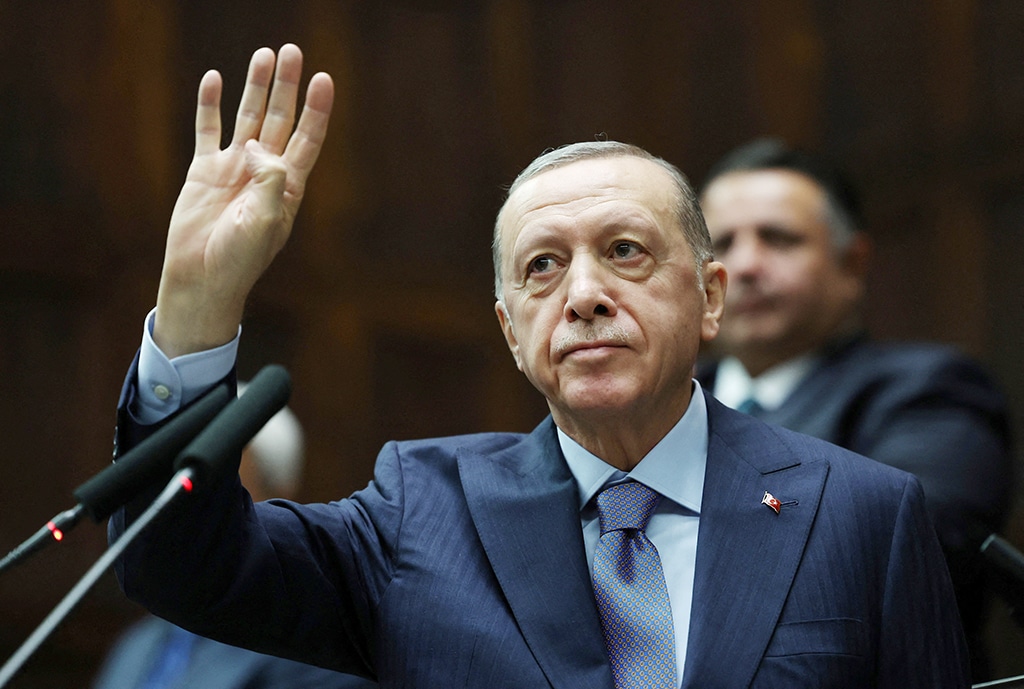
Turkish President Recep Tayyip Erdogan made statements suggesting that if Turkish forces had advanced further during the 1974 invasion of Cyprus, the entire island could have been Turkish. These remarks were criticized by Cyprus government spokesman Konstantinos Letymbiotis as “unacceptable” and “provocative.” Letymbiotis emphasized that Cyprus, a European Union member state, has been under occupation since the 1974 invasion, which he described as “barbaric.” Erdogan’s comments were also seen as disrespectful to international law, European principles, UN Security Council resolutions, and the UN Secretary-General. Despite Erdogan’s divisive statements, the Cypriot government remains committed to resolving the Cyprus issue through negotiations based on a bizonal, bicommunal federation with political equality, in line with UN resolutions.

Christodoulides in Brussels for EU Council

Christodoulides in Brussels for EU Council

President Nikos Christodoulides of Cyprus will visit Belgium to attend the College of Europe in Bruges, participate in the European Council summit in Brussels, and engage in both public and private meetings with officials. He will also attend a working lunch with the UN Secretary General and other EU member state leaders, focusing on the Middle East and Ukraine. Additionally, Christodoulides will visit the College of Europe following an invitation from the Society of Cypriot Students and will meet with Federica Mogherini, the college’s rector and former Vice President of the European Commission. He will also meet with Margaritis Schinas, the Vice President of the European Commission, before attending activities of the European People’s Party and a commemorative event for the 30th anniversary of the European Economic Area. Christodoulides will return to Cyprus on Friday evening.

President to visit College of Europe

President to visit College of Europe

President Nikos Christodoulides of Cyprus will travel to Bruges and Brussels for official engagements. In Bruges, he will visit the College of Europe, addressing students and academics as part of a national week dedicated to Cyprus, marking the first visit by a Cypriot President to the College. His agenda includes a private meeting with Rector Mogherini and a meeting with European Commission Vice-President Margaritis Schinas. In Brussels, President Christodoulides will participate in the European People’s Party proceedings, attend a working lunch with the UN Secretary-General and EU member state heads focusing on the Middle East, Ukraine, and global challenges, and engage in the European Council Summit discussions on the Middle East, Ukraine, Migration, Security, EU Enlargement, and External Relations. He will also attend a commemorative event for the 30 years of the European Economic Area and a Eurozone Summit. President Christodoulides, accompanied by officials, will return to Cyprus on March 22. A potential private meeting with the UN Secretary-General is under consideration.