Swiss central bank cuts rates in surprise move, getting ahead of global peers
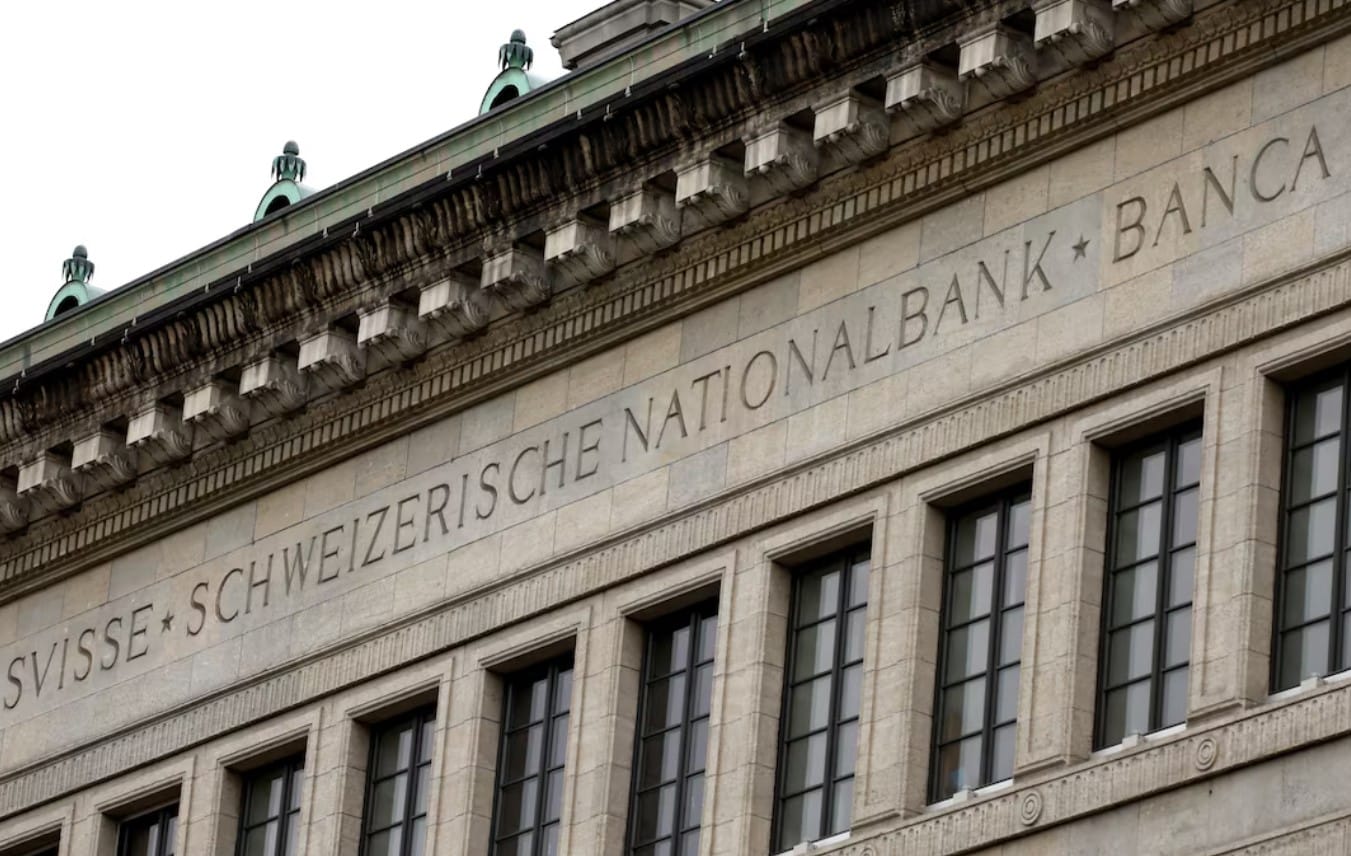
Swiss central bank cuts rates in surprise move, getting ahead of global peers

The Swiss National Bank cut its main interest rate by 25 basis points to 1.50 per cent and also reduced its interest rate on sight deposits to the same percentage. This decision marked the first rate cut in nine years and was unexpected by many, leading to a decrease in the value of the Swiss franc and a drop in Swiss government bond yields. The move was in response to a drop in Swiss inflation to 1.2 per cent in February, maintaining within the SNB’s target range of 0-2 per cent for nine consecutive months. The SNB’s action reflects its assessment that the fight against inflation over the past two and a half years has been effective, with expectations that inflation will remain within the target range in the coming years. This decision came before the chairman, Thomas Jordan, is set to step down in September.

US takes on Apple in major antitrust lawsuit

US takes on Apple in major antitrust lawsuit

The U.S. Department of Justice and 15 states, along with the District of Columbia, filed a lawsuit against Apple, accusing it of using its market power to drive up prices and harm smaller competitors. This marks a significant antitrust action by the Biden administration against Apple, which joins other major tech companies like Google, Meta Platforms, and Amazon that have faced similar lawsuits. The lawsuit alleges that Apple’s practices result in higher prices for consumers, developers, content creators, artists, publishers, small businesses, and merchants. Filed in U.S. federal court in Newark, New Jersey, the 88-page lawsuit aims to address Apple’s alleged anticompetitive behavior, particularly concerning its App Store’s commission fees and restrictions on third-party access to iPhone’s hardware and services. Apple has faced antitrust scrutiny and legal challenges in other regions, including Europe, Japan, and Korea, as well as from corporate rivals like Epic Games. Despite a legal challenge from Epic, Apple’s App Store commission structure has largely remained intact in the U.S., though a federal judge ordered Apple to allow alternative payment methods within apps. In response to new legislation in Europe, Apple plans to allow developers to offer their own app stores without commissions, though this move has faced criticism. The lawsuit also highlights complaints from consumer hardware firms about restricted access to iPhone’s sensors and chips, exemplified by Apple’s AirTags product and its exclusive control over contactless payment additions through Apple Pay. Apple defends its practices by citing privacy and security reasons.

Apple accused of monopolising smartphone markets in US antitrust lawsuit

Apple accused of monopolising smartphone markets in US antitrust lawsuit

The U.S. Department of Justice and 15 states filed a lawsuit against Apple, accusing the company of using its market dominance to inflate prices for its services and suppress smaller competitors. This legal action is part of a broader U.S. effort to regulate major technology companies. The lawsuit aims to challenge Apple’s business practices, which have historically involved charging premium prices for technology products and controlling the user experience. The Justice Department’s complaint focuses on restoring competition in the smartphone market, reducing prices for consumers, lowering fees for developers, and encouraging innovation. The lawsuit cites instances where Apple allegedly hindered competition, including issues related to messaging apps, smartwatches, and digital wallets. The Justice Department also referenced an email from Apple co-founder Steve Jobs indicating an intent to lock in developers and consumers to Apple’s payment systems. Apple responded by defending its business model, emphasizing the integration of hardware, software, and services in its products. The complaint seeks to prevent Apple from using its control over app distribution and other means to disadvantage rivals. Apple has faced similar antitrust challenges in Europe, Japan, Korea, and from companies like Epic Games. The U.S. Justice Department expressed confidence in its case, while Apple has argued that its restrictions on third-party developers are for privacy and security reasons. However, the Justice Department contends that Apple’s actions have sometimes reduced privacy and security. In Europe, new legislation has forced Apple to allow developers to offer their own app stores without paying commissions, although challenges remain in implementing alternative app stores. The lawsuit also examines Apple’s practices concerning hardware access and services like Apple Pay and iMessage.

Pound tumbles, gilts rally after BoE nods at rate cut ahead

Pound tumbles, gilts rally after BoE nods at rate cut ahead

– The Bank of England (BoE) kept its benchmark interest rate at 5.25%, the highest since 2008.
– The decision followed data showing inflation fell to its lowest in almost two-and-a-half years but remained high.
– After the BoE’s decision, the pound fell by as much as 0.48% to a session low of .2726 and was down 0.3% against the euro at 85.63.
– Two-year gilt yields dropped by as much as 12.8 basis points to 4.103%.
– The BoE’s interest rate-setters voted 8-1 to keep borrowing costs at 5.25%.
– Britain’s headline inflation rate fell to 3.4% in February from 4.0% in January, the highest in the Group of Seven.
– Money markets were pricing a 75% chance of a BoE rate cut in June after the decision.
– The Swiss National Bank delivered a surprise quarter-point rate cut, the first major central bank to dial back tighter monetary policy aimed at tackling inflation.
– The Bank of Japan raised rates for the first time in 17 years, and the Federal Reserve indicated it might cut rates three times this year.
– A survey showed British businesses continued to recover from recession, with inflationary pressures persisting.

33 countries to meet in Cyprus for Gaza aid summit

33 countries to meet in Cyprus for Gaza aid summit

A total of 33 countries, four organizations, and two NGOs have confirmed their participation in an international summit on March 21st to address the food crisis in Gaza. The countries include the United States, United Kingdom, France, United Arab Emirates, Italy, Greece, Spain, Switzerland, Portugal, Poland, Brazil, Denmark, Czech Republic, Israel, Australia, Germany, Bulgaria, Singapore, Netherlands, Slovenia, Japan, Canada, Malta, Qatar, Hungary, Belgium, Latvia, Luxembourg, Austria, Ireland, Sweden, Finland, Slovakia, and Cyprus as the host. The organizations are the European Union, the United Nations, USAID, and WHO. The NGOs are WCK and FOGBOW. Approximately 100 attendees are expected to be physically present at the summit.

Tanker capsizes off coast of Japan, seven deaths confirmed, media reports

Tanker capsizes off coast of Japan, seven deaths confirmed, media reports

A South Korean-flagged chemical tanker, the Keoyoung Sun, capsized off the coast of Yamaguchi prefecture in western Japan, resulting in seven confirmed deaths. The tanker was anchored due to bad weather and requested assistance after reporting it was tilting. It had 11 crew members aboard, with nine retrieved and seven confirmed dead. Rescue operations are ongoing for the remaining two crew members. The tanker was carrying 980 tonnes of acrylic acid, but no spillage has been detected.

The future of work: Why we need to think beyond the hype of the four-day week

The future of work: Why we need to think beyond the hype of the four-day week

Since the 19th century, the number of hours spent at work has been steadily declining in developed countries. The four-day week emerged in the 90s as a demand for a more equal division of work, developed in 1993 by French economist Pierre Larrouturou and tested in 1996 with France’s de Robien law. Antoine Riboud, CEO of Danone, supported the idea, and Volkswagen adopted the four-day week in 1994 but abandoned it in 2006. The Covid crisis renewed interest in the four-day week, with 56% of British employees willing to earn less for more free time. New Zealand introduced a four-day week post-pandemic to boost productivity and work-life balance, with Japan and several companies, including Hitachi and Microsoft, following suit. Belgium and the Nordic countries implemented a model where working hours are concentrated over four days without salary reduction. In contrast, Southern Europe, including Spain and Portugal, has explored a 32-hour week aiming to maintain productivity by reducing unproductive time. The concept of the four-day week challenges traditional work paradigms and suggests a shift towards valuing personal and collective fulfillment over individual success.

Thousands of Russians join Navalny-inspired ‘noon against Putin’ election protest

Thousands of Russians join Navalny-inspired ‘noon against Putin’ election protest

Thousands of people across Russia participated in a protest against President Vladimir Putin’s re-election, dubbed “noon against Putin,” by either spoiling their ballot paper or voting for one of the three candidates opposing Putin. The protest was inspired by the late opposition leader Alexei Navalny, who had endorsed the plan before his death. Navalny’s allies reported significant participation in the protest at various polling stations. Despite the protest, Putin was expected to secure a landslide victory. The Kremlin views Navalny’s political allies as extremists and claims Putin enjoys high approval ratings. The protest saw participation not only in Russia but also at Russian diplomatic missions abroad, with notable gatherings in Berlin and London.

Electric vehicle plans of Indian automakers

Electric vehicle plans of Indian automakers

India announced a reduction in import taxes on certain electric vehicles (EVs) for carmakers committing to a 0 million investment and starting domestic manufacturing within three years. This policy aims to increase competition in India’s car market, targeting a rise in EV sales from 2% to 30% by 2030. Tata Motors plans to expand its EV portfolio to 10 models in the next 3-4 years, aiming for EVs to constitute 25% of its total car sales by 2025. Mahindra and Mahindra anticipate electric models will account for 20%-30% of its SUV sales by March 2027. Hyundai Motor India intends to introduce five EV models by 2032 and increase its charging stations to 439 by 2027. Maruti Suzuki India plans to launch six EV models by 2030, with its first battery EV expected by the end of 2024. JSW Group announced a 400 billion rupee investment in EV and battery manufacturing in Odisha and is discussing technology and component supply with Volkswagen.

Magnificent Seven stocks , ‘look cheap’

Magnificent Seven stocks , ‘look cheap’

The CEO of deVere Group, Nigel Green, asserts that the Magnificent Seven tech stocks are undervalued compared to other stocks in the S&P 500. This analysis follows the S&P 500 reaching a new record high, along with other major indices like the Nasdaq Composite, Japan’s Nikkei 225, Germany’s Dax, and France’s Cac 40. The Magnificent Seven achieved a net income growth of 27% in 2023, contrasting with a 4% net income loss for the rest of the S&P 500. Their early investments in artificial intelligence (AI) have contributed to their undervaluation. Companies such as Microsoft and Meta have made significant investments in AI, with Meta’s stock increasing by 44% and Microsoft’s by 8% this year. Nvidia, a chipmaker, has seen its stock value rise by 87% due to its contributions to the AI revolution. Despite declines in Tesla and Apple’s stock values in 2024, by 28% and 12% respectively, their long-term growth prospects remain strong. Green emphasizes the importance of the Magnificent Seven tech stocks for future growth and innovation.