Nvidia stock climbs as CFO says new chip to ship in 2024

Nvidia stock climbs as CFO says new chip to ship in 2024

Nvidia’s stock increased by nearly 2% to 1 after announcements at their annual developer conference in San Jose, California. The company revealed its new flagship AI processor, Blackwell, expected to ship later this year, with CEO Jensen Huang highlighting a potential data center market worth over 0 billion. Nvidia is transitioning from selling individual chips to complete systems to capture a larger share of data center spending. The Blackwell processor, developed in collaboration with TSMC to avoid previous bottlenecks, is claimed to be 30 times faster at certain tasks than its predecessor and is priced between ,000 and ,000. Nvidia is also working with Samsung Electronics and SK Hynix on high bandwidth memory chips, with SK Hynix beginning mass production of HBM3E chips for Nvidia. Over the past 12 months, Nvidia’s stock has more than tripled, making it the third-most valuable company in the US stock market. Despite a high valuation, analysts have raised their future earnings estimates for Nvidia, with major customers like Amazon, Google, Meta Platforms, Microsoft, OpenAI, and Tesla expected to use the new chip. Morningstar analysts predict Nvidia will maintain its “best-of-breed” status in the AI industry and have increased their revenue forecasts for the company’s data center business.

Intel prepares for $100 billion spending spree across four US states

Intel prepares for $100 billion spending spree across four US states

Intel is planning to spend 0 billion across four US states to build and expand factories, having secured .5 billion in federal grants and loans and hoping to secure another billion in tax breaks. The plan includes creating the world’s largest AI chip manufacturing site near Columbus, Ohio, by as soon as 2027, with funding from the CHIPS Act. This initiative also involves revamping sites in New Mexico and Oregon, and expanding operations in Arizona. Intel aims to regain its leading position in semiconductor manufacturing with government support, spending 30% of the budget on construction and the rest on purchasing chipmaking tools from companies like ASML, Tokyo Electron, Applied Materials, and KLA. CEO Pat Gelsinger mentioned the possibility of needing more US funding to re-establish the country as a leader in semiconductor manufacturing and highlighted the importance of “smart capital” from low-interest-rate funding.

AI startup Cohere seeks $5 billion valuation in latest fundraising

AI startup Cohere seeks $5 billion valuation in latest fundraising

Cohere, an AI startup, is in advanced talks to raise 0 million at a valuation of about billion. The Toronto-based company’s annualized revenue run rate has grown to million this month from million in December, following the launch of its new model Command-R. Cohere, founded by former Google researchers, focuses on building enterprise-focused AI models and has a partnership with Oracle. It was valued at .2 billion last June after raising 0 million from investors including Inovia Capital, Nvidia, and Oracle. Reuters reported in January that Cohere was seeking to raise between 0 million to billion. Existing investors are expected to join the latest funding round. Cohere competes with OpenAI and Anthropic, focusing on business applications of AI. OpenAI has projected billion in revenue for 2024 and has raised over billion from investors, including Microsoft. Other AI labs like Anthropic and Mistral have also received significant investments.

Micron eyes record high as AI demand powers strong forecast

Micron eyes record high as AI demand powers strong forecast

Micron Technology’s stock surged 18% earlier this week and was set to open at a record high due to a strong revenue forecast, driven by high demand for AI hardware. Other chip firms like Western Digital, Advanced Micro Devices, and Broadcom also saw their stocks rise. Micron announced that its high-bandwidth memory (HBM) chips, crucial for AI development, are sold out for 2024, with most of its 2025 supply already allocated. The company, a supplier to Nvidia along with South Korea’s SK Hynix, is expected to add nearly billion to its market value. Micron’s shares have increased over 60% in the past 12 months, with expectations of growing its share in the HBM market. The company’s forecast for adjusted gross margin is above market estimates, attributed to the tight supply and high demand for HBM chips.

‘Govt not taking oversight authority seriously at all’

‘Govt not taking oversight authority seriously at all’

The Cyprus Bar Association criticized the government for its approach to establishing an oversight authority, accusing it of lacking seriousness. This criticism followed a presentation at the finance ministry about the oversight authority, which was approved by the cabinet last month to address sanctions and the country’s reputation regarding money laundering. The Bar Association pointed out legal issues with the framework and accused the finance ministry of not properly evaluating and presenting important matters, leading to serious weaknesses in implementing the decision. Stakeholders such as the accountant’s association, anti-money laundering unit, fiduciary association, and Securities and Exchange Commission were present at the presentation. The Bar Association also claimed that the finance ministry sent stakeholders the wrong document regarding the plans for the new authority and disagreed with the existing framework. It was clarified that CySEC would not oversee 50 of the biggest service industry firms or high-risk companies as previously thought. The Finance Minister had stated that the authority would be led by CySEC and conduct checks with the Bar Association and the accountant’s association. The Bar Association has called for the president and cabinet to reconsider their decisions and has expressed concerns about CySEC’s involvement breaching client confidentiality.

Frederick University to host lecture by ITF, ’s Stephen Cotton

Frederick University to host lecture by ITF, ’s Stephen Cotton

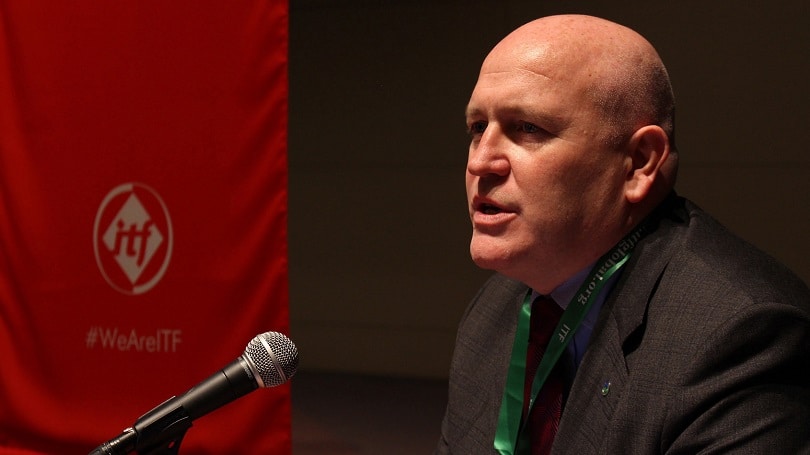
Frederick University will host a lecture by Stephen Cotton, the General Secretary of the International Transport Workers Federation (ITF), on March 28, from 6.15-7.45pm, at the University’s Limassol campus. The lecture will focus on the ITF’s mission to protect the rights of transport workers worldwide and the importance of the global labour movement to the world’s seafarers. The ITF is a global union federation representing over 18 million transport workers in 150 countries across various sectors including maritime, port, aviation, road, rail, and urban transport. The event is co-organised by the Department of Maritime Transport and Commerce and Department of Law, and is open to the public and stakeholders in the maritime industry. Stephen Cotton was elected as General Secretary of the ITF in 2014 and re-elected in 2018. He has led the ITF to become a proactive campaigning organisation and holds positions in other significant organizations, including the ITF Seafarers’ Trust and the United Seaman’s Service (USS) governing body. In 2021, he was appointed as a Member of the Board of the UN Global Compact and chaired the Council of Global Unions (CGU) between 2019 and 2023. He received the USS Admiral of the Ocean Sea (AOTOS) Award in 2014.

Govt announces new criteria for naturalisation

Govt announces new criteria for naturalisation

The interior ministry of the Republic of Cyprus announced a new set of criteria for naturalisation as citizens. Applicants must have legal and continuous residence for 12 months before applying, with absences not exceeding 90 days in total not interrupting this period. They must have legally resided in Cyprus for at least seven years within the ten years preceding the 12-month period. Applicants must be of good character, have a minimum B1 level knowledge of the Greek language, understand basic elements of Cyprus’s modern political and social reality, have adequate accommodation, stable and regular financial resources for themselves and their family, and intend to continue residing in Cyprus. There are also specific criteria for the naturalisation of “highly skilled” individuals, which applies to employees of companies with foreign interests operating in Cyprus, Cypriot shipping, high-tech, innovation, pharmaceutical, biogenetics, and technology companies. These applicants have reduced residence and language requirements, needing only three or four years of residence in Cyprus and a minimum A2 level of Greek language competence.

Ministry outlines new citizenship criteria

Ministry outlines new citizenship criteria

The Ministry of Interior has announced the acceptance and examination of naturalization applications under the Population Registry (Amendment) Law of 2023. The qualifications for naturalization include legal and continuous residence for 12 months before applying, legal residence for at least 7 years in the previous 10 years, good character, knowledge of the Greek language at level B1, understanding of the Republic’s modern political and social reality, suitable accommodation, stable financial resources, and an intention to reside in the Republic. Different qualifications apply to individuals residing for high-skilled employment and their families, under Ministerial Council Decision 92.018 dated 15/10/2021, including companies with foreign interests, Cypriot shipping, high-tech/innovation, pharmaceutical, biogenetics, and biotechnology companies, and those registered in the Foreign Companies Registry. These qualifications include legal residence for 12 months before applying, legal residence for 4 or 3 years depending on Greek language proficiency (A2 or B1), and similar requirements as the general qualifications regarding character, language, knowledge of the Republic, accommodation, financial resources, and residency intention.

Cyprus tourism should , ‘respect both visitors and resources’, tourism minister says

Cyprus tourism should , ‘respect both visitors and resources’, tourism minister says

Deputy Minister of Tourism Kostas Koumis emphasized that a sustainable destination respects both its visitors and its resources, both natural and human. He made this statement during his participation at the annual tourism conference organized by the Association of Cyprus Tourist Enterprises (Stek), which was held in Nicosia. The theme of this year’s event was ‘Tourism: New Realities Demand a More Competitive Model’. Koumis highlighted the importance of tourism to the economies of Cyprus and Greece, noting that tourism contributed 12.8 percent to the GDP of Cyprus this year. He mentioned the recognition of the value of tourism on a pan-European level after 2000, especially during the pandemic, and the discussions about creating a common tourism portfolio to address challenges faced by various destinations. Koumis also discussed the need to address reduced air connectivity during winter, the threat of climate change, and the issue of seasonality in Southern European countries’ tourism sector. He proposed initiatives for European citizens to visit destinations within the union during low-visitor months with European funds and mentioned collaboration with the Ministry of Labour to improve vocational training schemes. Koumis stressed the need to improve air connectivity, enhance Cyprus’ tourism product during winter, and the importance of digital transformation in the tourism industry. Myron Flouris, Secretary-General for Tourism Policy and Development at the Greek Ministry of Tourism, discussed the impact of natural disasters on Greece and the importance of planning and prevention for resilience in tourism. Alexandros Thanos, an advisor for the Greek Tourism Confederation, highlighted the significant contribution of tourism to Greece’s GDP and the imbalance in revenue levels among the country’s regions. Stek president Akis Vavlitis emphasized the strong influence of seasonality on Cypriot tourism and called for strategic planning and expedited procedures for the arrival of workers from third countries. The discussion also covered the risks of climate change for the tourism product of countries like Greece and Cyprus and the need for tourism businesses to focus on the human factor and offer authentic experiences.

Apple market cap bigger than DAX, TSE

Apple market cap bigger than DAX, TSE

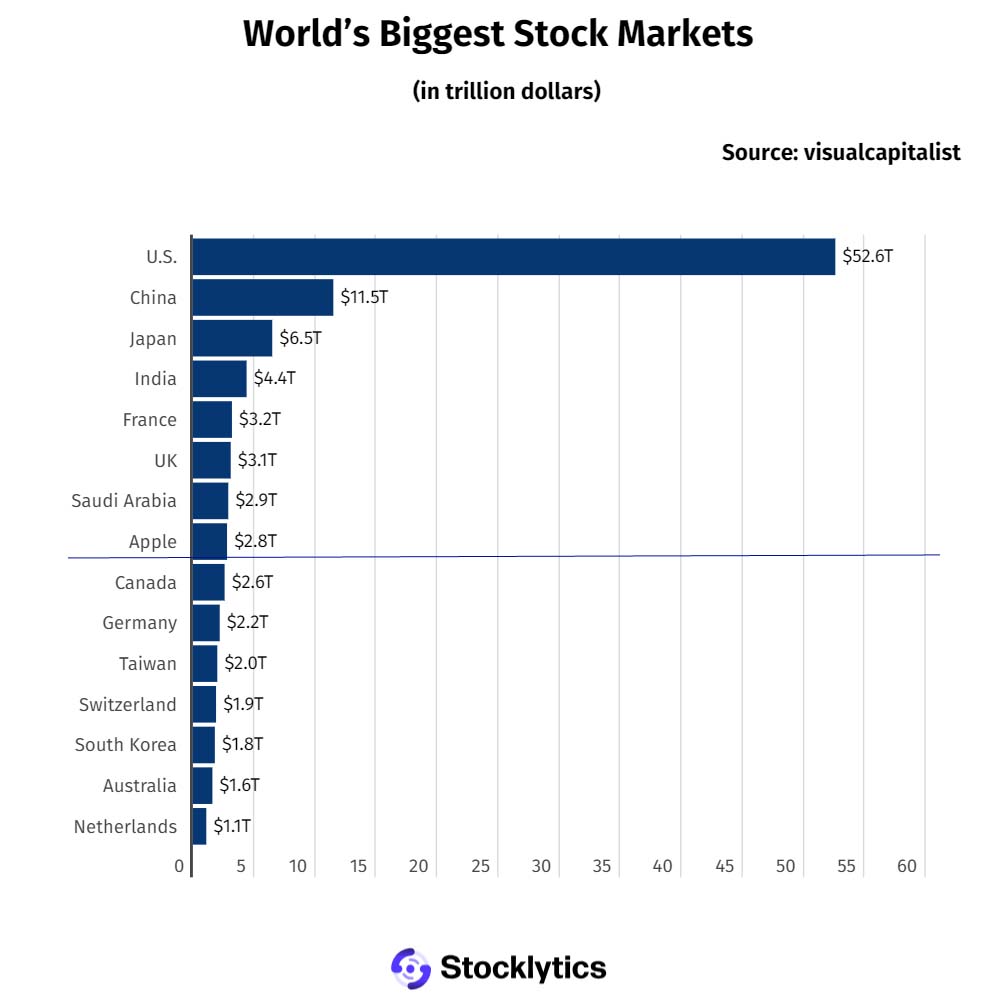
Apple’s current market capitalisation is .8 trillion, ranking it eighth in the world and surpassing the stock exchanges of Germany (DAX) and Canada (Toronto Stock Exchange). The United States leads in terms of market cap with .6 trillion, followed by China with .5 trillion and Japan with .5 trillion.