Bank of England to start cutting in Q3 but strong chance of Q2 move
Bank of England to start cutting in Q3 but strong chance of Q2 move

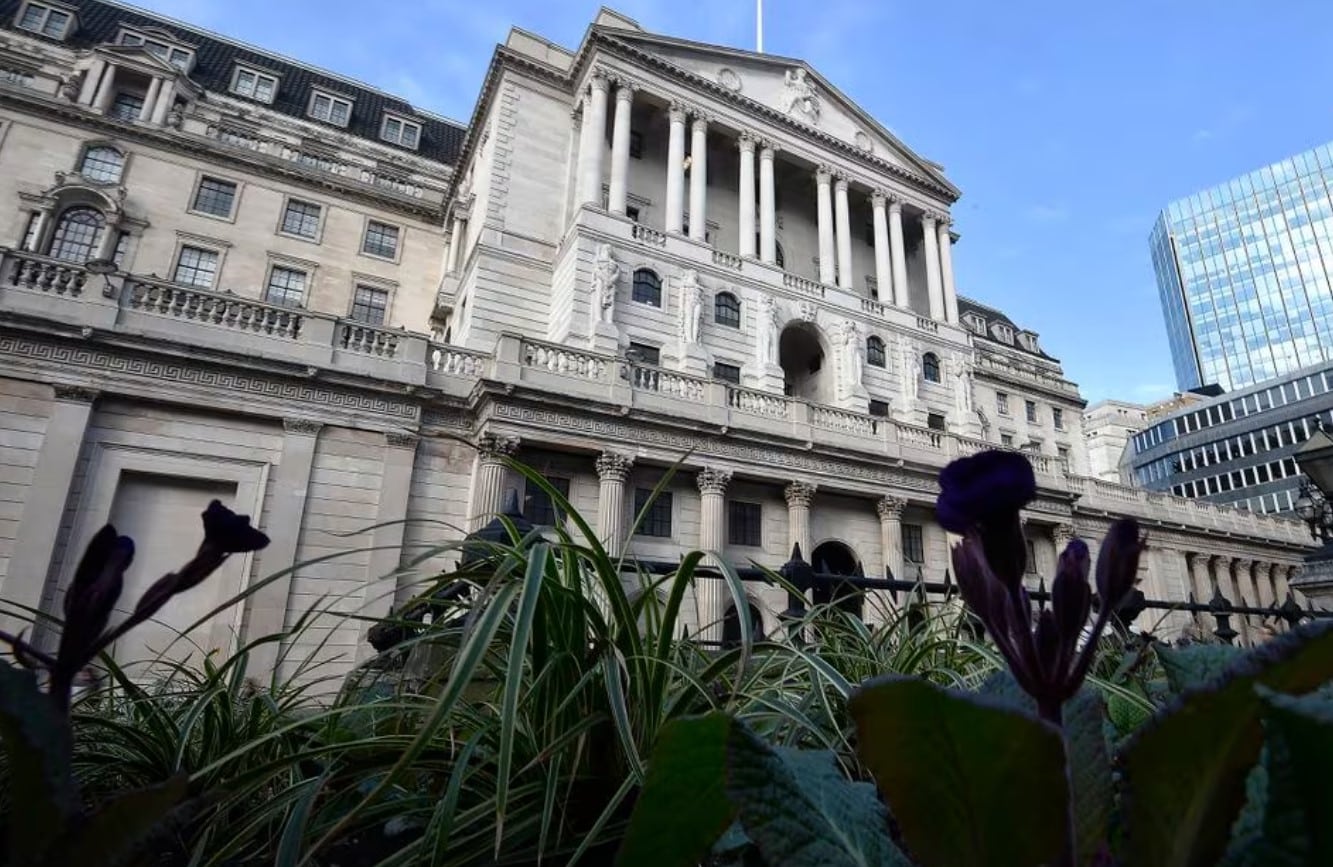
The Bank of England is expected to start reducing borrowing costs in the third quarter, with a Reuters poll indicating that while 40% of economists anticipated an earlier cut, it is more probable that the first reduction will occur later than sooner. This aligns the Bank of England with the Federal Reserve and the European Central Bank, which are both expected to begin cutting interest rates in June. Inflation in the UK has decreased from a 41-year high of 11.1% in October 2022 to below the Bank’s 2% target, anticipated to be 1.8% next quarter, and is expected to stay around this target until at least the end of 2025. All but three of 68 economists forecast at least one reduction in the Bank Rate from its 16-year peak of 5.25% by the end of September, with a significant minority suggesting the first cut could be as early as the next quarter. No changes are expected on March 21, nor are any further increases after 14 hikes from December 2021 to August 2023. The Bank Rate is predicted to be 4.75% by the end of September, 4.50% by the end of 2024, and to decrease steadily to 3.25% by the end of 2025. The UK economy showed growth in January after a shallow recession in the second half of 2023, with expectations of 0.2-0.3% expansion each quarter through to 2026. Growth forecasts for 2024 and 2025 are 0.3% and 1.2%, respectively. A survey published earlier this month indicated businesses had their strongest month in February since the previous year, but inflation pressures remain a concern for the Bank of England.


UK PM Rishi Sunak rules out holding an election in early May

UK PM Rishi Sunak rules out holding an election in early May

British Prime Minister Rishi Sunak announced he would not hold a general election in early May, indicating the vote would likely occur later in the year. This statement aims to quell speculation about an early election, despite opposition parties urging for one. Sunak confirmed there would be no election on May 2, the same day as local elections, due to logistical challenges of organizing two elections close together. Despite facing political challenges, including a party defection and controversy over donor funds, Sunak has previously suggested the election could happen in the latter half of the year. Current polls show Sunak’s Conservative Party trailing behind the Labour Party by approximately 20 percentage points. The government has faced difficulties in fulfilling its main promises, but Sunak has achieved the goal of halving inflation by the end of 2023. A general election must be held by January next year, but Sunak has the discretion to call one sooner.

Euro awaits US data, ECB speakers

Euro awaits US data, ECB speakers

The EURUSD exchange rate was trading in the mid 1.0900s after reaching a peak at 1.0981 the previous week. Upcoming data releases and events are expected to introduce some volatility to the Euro-dollar pair. In the US, upcoming factory gate inflation and Retail Sales data could influence expectations regarding the Federal Reserve’s timeline for interest rate cuts, which is a significant factor for the US Dollar. Economists anticipate a decrease in Core PPI to 1.9% year-over-year in February from 2.0% in January, with a month-on-month forecast showing a 0.2% increase compared to the 0.5% increase the previous month. The headline Producer Price Index (PPI) is expected to show a 1.1% year-over-year gain, up from 0.9% in January, and a 0.3% month-on-month gain, consistent with the previous month. This data is a crucial indicator for CPI inflation, as increases in wholesale costs are typically passed on to consumers. Market participants are betting on a 67.2% probability of the Fed cutting interest rates in June, according to the CME FedWatch Tool. US Treasury Secretary Janet Yellen stated that it seems unlikely for interest rates to return to pre-COVID-19 levels and deemed the interest rate projections in President Biden’s budget plan as “reasonable.” In Europe, several ECB officials are set to speak, potentially providing insights into whether interest rates will be cut in April or June. If inflation remains high, interest rates are likely to stay elevated, supporting the Euro. ECB Governing Council member Francois Villeroy de Galhau indicated a preference for an April rate cut, while Bank of Austria Governor Robert Holzmann and ECB President Christine Lagarde suggested a June timeline for revisiting rate policies. The timing of ECB rate cuts could impact the Euro and EURUSD exchange rate. After recent US inflation data, a calmer period is expected in the EURUSD pair ahead of the next week’s Federal Reserve meeting.

Zara-owner Inditex shares rise to record high on spring season boost

Zara-owner Inditex shares rise to record high on spring season boost

– Inditex’s shares rose to a record high after reporting positive early spring sales.
– Sales at constant currencies for Feb. 1 to March 11 jumped 11 percent.
– Annual sales rose 10 percent to a record 36 billion euros in the year to January 2024.
– Inditex’s revenue growth in 2023 topped that of rival H&M.
– The company plans to open Zara stores in Los Angeles, Las Vegas, and Cambridge, Massachusetts, and the first Massimo Dutti store in Miami.
– Inditex has widened its lead over H&M by delivering trends faster and selling more clothes at higher prices.
– H&M reported a 4 percent drop in December and January sales.
– Inditex’s sales growth has slowed compared to the previous year, with a 13.5 percent increase in the first half of spring 2023.
– The company posted an annual net profit of 5.4 billion euros, up 30 percent on the year.
– Inditex plans to invest 900 million euros per year through 2025 on logistics.
– It will spend a total of 1.8 billion euros this year on expanding store space by 5 percent, technology, and improving online platforms in 2024.
– Inditex will start weekly livestreaming shopping services for Zara in the U.S. and UK.
– The company will expand its second-hand business to the U.S. after launching in the UK in 2022.
– Inditex had 5,692 stores worldwide in 2023, 123 fewer than the previous year.
– Inventories in January were 7 percent lower year-on-year.
– The company will increase its dividend payout by 28 percent to 1.54 euros per share.
– Zara began raising prices earlier than H&M in response to inflation and to offer high-fashion pieces.
– Over the last two years, Zara has increased average prices at a slower pace than H&M and others.
– Investors expect Inditex to continue to outperform H&M, with the Spanish group having a higher valuation than peers like H&M, Gap, and Next.

Gold poised to hit $2,250 Q2 target, say economists

Gold poised to hit $2,250 Q2 target, say economists

Gold’s price decreased by 1.1% following a higher-than-expected US inflation report. Economists from TD Securities predict that the price of gold may decrease further to a range between ,025 and ,100. The February Consumer Price Index (CPI) showed core inflation at 0.4% month-over-month, reaching 3.8% year-over-year, and headline inflation also increased by 0.4% month-over-month to 3.2% year-over-year. This inflation data suggests the Federal Reserve may not reduce interest rates soon. Despite this, TD Securities still sees potential for gold to reach a ,250 target in the second quarter if economic data continues to weaken. ANZ Bank economists also noted that the unexpected US inflation figures have negatively impacted gold prices, affecting market expectations for a rate cut in June. Commerzbank analysts attribute the recent rise in gold prices to speculative financial investors, with net long positions in gold futures increasing significantly. However, they caution that higher-than-expected US inflation could lead to a decrease in gold prices, especially if speculative investors decide to take profits.

EURGBP gains ground following UK jobless, German CPI

EURGBP gains ground following UK jobless, German CPI

– Euro-Sterling was trading below the mid-0.8500s during early European trading on Tuesday.
– The EURGBP cross was trading around 0.8540, gaining 0.16% on the day.
– The UK ILO Unemployment Rate increased to 3.9% in the three months to February from 3.8%.
– The number of people claiming jobless benefits in the UK rose by 16,800 in February.
– The UK Employment Change was -21,000 in January.
– The German Consumer Price Index (CPI) for February was 0.4% MoM and 2.5% YoY.
– The German Harmonized Index of Consumer Prices (HICP) for February was 0.6% MoM and 2.7% YoY.
– Upcoming data releases include the UK monthly GDP, Industrial Production, Manufacturing Production, and Trade Balance for January.

Eurozone to phase out energy support measures

Eurozone to phase out energy support measures

Eurozone finance ministers decided to gradually phase out energy support measures in 2024 to reduce government deficits. This decision was emphasized during the Eurogroup meeting of finance ministers. The Cyprus government plans to end the reduced consumer tax on car fuel and the subsidy of electricity bills by the end of April 2024. A political agreement on reforming the EU’s economic governance framework was reached in February 2024, with optimism for its early adoption. Ministers provided a cautiously optimistic outlook for the euro area’s economy in 2025, citing a robust labour market and a downward inflation path. However, they acknowledged economic risks due to global uncertainty. The reformed framework aims at strengthening debt sustainability and promoting growth through structural reforms and investment. An overall slightly contractionary fiscal stance is expected in the euro area for 2025, focusing on priority areas like the green and digital transition and defence capabilities, with an emphasis on improving the efficiency, quality, and composition of public spending.

Real estate sector depends on outside factors

Real estate sector depends on outside factors

The Cyprus economy has shown strong resilience, recording one of the highest growth rates in the European Union, according to Dr. Giorgos Mountis, CEO of Delfi Partners. The Cypriot economy grew by 2.4% in 2023 and is estimated to grow by 2.8% in 2024 and 3% in 2025. Inflation decreased from 8.1% in 2022 to 3.9%, with further reductions expected to 2.4% in 2024 and 2.1% in 2025. Efforts to contain inflation involved decisions that temporarily affected citizens’ incomes, with interest rate increases placing significant pressure on household incomes. However, optimism exists that the European Central Bank’s decisions will start to change in 2024, potentially leading to a decrease in domestic interest rates. Unemployment is at very low levels, approaching full employment, though many sectors face personnel shortages. The government’s strategies to employ and attract foreign labor could lead to an increase in the country’s population and economic development. The real estate sector remained resilient in 2023, with sales contracts increasing by 16% compared to 2022, reaching the highest level since 2008, driven by increased demand from non-European buyers. Apartment prices in 2023 exceeded those of 2010 for the first time, according to the Central Bank of Cyprus, leading to an increase in properties purchased for rental investment.

WTI moves in tight range, hovers around $77.80

WTI moves in tight range, hovers around $77.80

– The benchmark West Texas Intermediate (WTI) crude oil price was around .80 per barrel in Asian trading on Tuesday.
– Oil markets are awaiting the release of the Consumer Price Index (CPI) data from the United States, with expectations for a modest uptick in February’s US inflation figures, but the annual index is forecasted to hold steady.
– A strong CPI report could decrease the likelihood of an immediate rate cut by the Federal Reserve, potentially bolstering the US Dollar and challenging crude oil prices.
– The probability of a rate cut in June has slightly decreased to 68.9%, according to the CME FedWatch Tool.
– Market participants are looking forward to monthly market reports from OPEC, the International Energy Agency (IEA), and the Energy Information Administration (EIA) to assess the global demand outlook.
– ANZ analysts expect demand projections from the monthly reports of the three major oil agencies to remain largely unchanged, but any unexpected upward revisions could alleviate demand concerns.
– The US has led global oil production for the sixth consecutive year, with a record-breaking average production of 12.9 million barrels per day (bpd).
– US crude oil production reached a new monthly record high of over 13.3 million bpd in December.

Europe, ’s stocks fall from record highs, inflation data in focus

Europe, ’s stocks fall from record highs, inflation data in focus

European stock indexes fell from recent record highs on Monday, with Wall Street also expected to face losses. This shift in the market is attributed to an uncertain economic outlook and anticipation for U.S. inflation data set to be released later in the week. U.S. stocks began to decline from record highs on Friday, a move analysts believe was due to profit-taking after mixed U.S. payrolls data, yet expectations for a Federal Reserve rate cut in June remained. Traders are now focused on the upcoming U.S. inflation data, which could influence expectations for when major central banks will start reducing rates. As of 1236 GMT, the MSCI World Equity index was down by 0.3 percent after reaching a new all-time high on Friday. Similarly, the pan-European STOXX 600, which also reached a new all-time high on Friday, was down by 0.5 percent. London’s FTSE 100 and Germany’s DAX experienced declines of 0.5 percent and 0.7 percent, respectively. Amelie Derambure, a senior multi-asset portfolio manager at Amundi, suggested that Monday’s downturn might be due to uncertainty about the economic outlook and high stock valuations. Recent comments from Fed Chair Jerome Powell and European Central Bank policymakers have raised expectations for interest rate cuts starting in the summer, which contributed to pushing stock indexes to new highs.