Rate cut in Q3, after hot US CPI, says deVere boss
The CEO of deVere Group predicts that the Federal Reserve will only cut rates once this year, with the next cut not expected until January 2025.
The CEO of deVere Group predicts that the Federal Reserve will only cut rates once this year, with the next cut not expected until January 2025.
Fact: The CEO of deVere Group predicts that there will be just one US interest rate cut by the Federal Reserve this year, following a stronger-than-expected jobs report for March.

Tesla’s first-quarter sales dropped by 20% compared to the prior quarter and 8.5% from the previous year, marking its first year-over-year decline since the pandemic began in 2020. Elon Musk’s stock price also decreased to 5-166 from 5. This decline in sales is reflective of broader market trends, with cautious consumer sentiment impacting companies in sectors based on discretionary spending. Investors are advised to conduct thorough due diligence and diversify their portfolios to mitigate risks associated with market volatility. Despite challenges, there are opportunities for discerning investors to acquire high-quality assets at discounted prices and capitalize on long-term gains. Disruptive technologies and innovative business models also present growth opportunities amid market turbulence.

The Bank of England left interest rates unchanged at 5.25%, a 16-year high, on Thursday. Critics and financial experts, including Nigel Green, CEO of the deVere Group, are calling for the central bank to reduce rates at their next opportunity to alleviate financial strains on businesses and households, enhance business profitability, make homeownership more accessible, boost consumer confidence and spending, and stimulate economic growth. Lower interest rates are also seen as beneficial for investors, as they tend to increase demand for risk assets like equities. Green argues that proactive rate cuts are essential to prevent economic downturns and mitigate recession risks, despite concerns that such actions could fuel inflation. He emphasizes that the Bank of England has the tools and expertise to manage inflation effectively while supporting growth through rate adjustments.

The CEO of deVere Group, Nigel Green, asserts that the Magnificent Seven tech stocks are undervalued compared to other stocks in the S&P 500. This analysis follows the S&P 500 reaching a new record high, along with other major indices like the Nasdaq Composite, Japan’s Nikkei 225, Germany’s Dax, and France’s Cac 40. The Magnificent Seven achieved a net income growth of 27% in 2023, contrasting with a 4% net income loss for the rest of the S&P 500. Their early investments in artificial intelligence (AI) have contributed to their undervaluation. Companies such as Microsoft and Meta have made significant investments in AI, with Meta’s stock increasing by 44% and Microsoft’s by 8% this year. Nvidia, a chipmaker, has seen its stock value rise by 87% due to its contributions to the AI revolution. Despite declines in Tesla and Apple’s stock values in 2024, by 28% and 12% respectively, their long-term growth prospects remain strong. Green emphasizes the importance of the Magnificent Seven tech stocks for future growth and innovation.

The recent surge in tensions in the Middle East, caused by attacks carried out by Iran-backed militants, is leading investors to reassess their strategies. The attacks have increased uncertainty and market volatility, prompting investors to adopt a more cautious approach and impacting various asset classes. The Middle East is a significant player in the energy market, and disturbances in the region can have a profound impact on energy prices. Rising oil prices could have cascading effects on markets, including increased production costs, higher transportation expenses, and a potential drag on consumer spending. Investors in energy-related stocks and commodities may experience increased levels of volatility. If the events in the Middle East continue to escalate, there may be a flight to safety, with investors reallocating their portfolios to mitigate risks. This could lead to increased demand for safe-haven assets such as government bonds and certain currencies like the US dollar. Diversification strategies become even more critical during periods of heightened geopolitical tension. Investors will also be monitoring the impact on trade and supply chains, as rising tensions can lead to increased shipping costs, delays, and potential disruptions in the flow of goods. Companies operating in or dependent on the affected regions may face challenges, while those with diversified supply chains may be better positioned to navigate uncertainties. The recent attacks in the Middle East are injecting a new level of uncertainty into financial markets, and investors are actively managing the potential ramifications of escalating tensions.
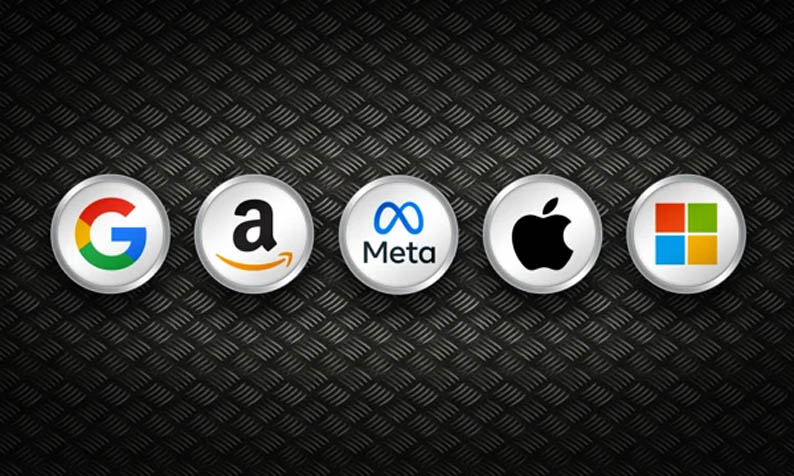
Five Big Tech companies with a combined market value of over trillion will report earnings this week. Investors are interested in the potential benefits of artificial intelligence (AI) technologies from Microsoft, Google-parent Alphabet, Meta Platforms (formerly Facebook), Amazon, and Apple. These companies have been driving the S&P 500 index’s record gains in 2023. The CEO of deVere Group describes this earnings season as “critical” for Big Tech due to its influence on the broader market and the technology sector’s role in economic growth. Investors are also looking for updates on AI innovation, consumer behavior, and e-commerce trends. The performance of these tech giants will have significant implications for market and economic sentiment.

The European Central Bank has decided to keep interest rates unchanged at 4% for the third consecutive meeting. The bank is focused on bringing inflation down to 2% and is committed to maintaining interest rates at their current levels for a long duration. Investors are advised to pay attention to the ECB’s messaging and not be swayed by market hype and speculation. The decision to hold interest rates steady is part of a broader global context where central banks are closely monitoring economic indicators and working towards economic stability.