Euro-Dollar weakens ahead of Fed, Lagarde cites lower inflation

Euro-Dollar weakens ahead of Fed, Lagarde cites lower inflation

The EURUSD pair declined to the lower 1.0800s after European Central Bank (ECB) speakers, including President Christine Lagarde and Bank of Ireland Governor Gabriel Makhlouf, cited lower inflation. Lagarde mentioned a decrease in wage inflation and stated that the ECB is closely monitoring this before deciding on future policy moves. Lower inflation could lead to the ECB cutting interest rates, negatively affecting the Euro and the EURUSD pair. Lagarde noted that average wage growth for 2024 fell from 4.4% to 4.2% between the ECB’s January and March meetings. She mentioned the need for more evidence of receding inflation but suggested that rate hikes could be dialed back in June if data aligns with current expectations. The ECB is divided into two camps regarding the timing of interest rate decisions. ECB Vice President Luis de Guindos, preferring to wait until the June meeting, highlighted that services inflation remains too high. The Federal Reserve is expected to complete its March policy meeting without changing interest rates but may revise its quarterly forecasts and statement, potentially affecting the US Dollar valuation. Speculation exists that the Fed might adjust its economic forecasts in the Summary of Economic Projections (SEP) and the “dot plot,” possibly revising down the forecasted rate cuts in 2024 due to persistent inflationary pressures.

Another pivotal week

Another pivotal week

– This week is pivotal for investors and traders trying to gauge the Federal Reserve’s next move in terms of its monetary policy.
– Adjustments have been made in the Fed rate cut expectations by looking at the US equity markets or fixed income markets.
– Wall Street giants have scaled back their rate cut bets for this year while being more optimistic for 2025.
– Controlling inflation and navigating the economy post-COVID-19 crisis have been challenging tasks for the Fed.
– Recent data on producer prices and consumer prices raised concerns among investors and traders about inflation plateauing and becoming stickier than anticipated.
– The Fed Chairman indicated that the nature of inflation and its measurement have been permanently impacted by COVID, suggesting a reevaluation of the 2% inflation target.
– Consumer prices increased by 0.4% for the month and by 3.2% from a year ago, while producer prices jumped by 0.6% on the month, double the Dow Jones estimate.
– The Fed is expected to keep the rate at its current level of 5.50% in the upcoming monetary policy announcement.
– The sticky nature of inflation reduces the incentive for the Fed to take aggressive measures to lower interest rates.
– Goldman Sachs expects the Fed to cut rates three times this year, down from an earlier expectation of four times.
– The possibility of Donald Trump returning to office could influence the Fed’s rate cut decisions, as he favors lower interest rates.
– US stock indices have experienced volatility, partly due to sell-offs among some major stocks.
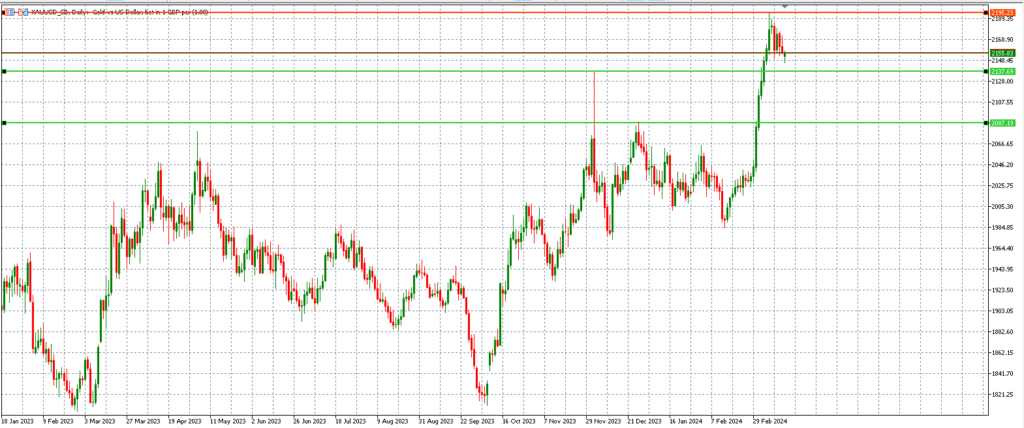
– Gold recorded its first negative week in over three weeks, with its current record high being about shy of ,200. The immediate support level for gold stands at 37, with the next support level at 87, and resistance at 95.

How to navigate the loan application process successfully

How to navigate the loan application process successfully

The text provides a comprehensive guide on navigating the loan application process, emphasizing the importance of understanding the basics of loans, assessing financial health, researching loan options, choosing a reliable lender, and following a step-by-step application process. It highlights the significance of maintaining a good credit score, providing accurate information, and understanding loan terms for a successful application. Additionally, it introduces the concept of leveraging a loan affiliate program, like Lead Stack Media, as a resource to access a network of reputable lenders and potentially secure better loan terms.

Rich Americans keep high-end RV company rolling along

Rich Americans keep high-end RV company rolling along

Most US recreational vehicles are produced in Elkhart, Indiana, while the Bowlus, a luxury travel trailer, is made in Oxnard, California. The Bowlus is designed to be towed by a Porsche sports car and features a 1930s design with a minimalist interior. Its top-end model costs 0,000. Demand for the Bowlus increased during the COVID-19 pandemic, and the company is now expanding by offering a lower-priced version and selling through dealerships. Bowlus trailers are handcrafted by 35 workers and the company plans to produce 100 trailers this year. The Bowlus was originally designed by a Los Angeles aerospace engineer during the Great Depression and uses a monocoque structural system, making it light but strong. Other companies are also developing luxury and battery-powered trailers, such as Aero Build and Pebble, with prices ranging from 9,000 to 9,900.

Adobe forecasts downbeat second-quarter revenue

Adobe forecasts downbeat second-quarter revenue

Adobe forecasted its second-quarter revenue to be between .25 billion and .30 billion, which is below the analysts’ estimates of .31 billion. The company’s shares fell more than 10% after this announcement. Adobe has been incorporating AI features into its products like Acrobat, Photoshop, and Premiere Pro, and introduced a new AI assistant for Reader and Acrobat last month. However, it faces competition from startups such as Stability AI and Midjourney. For the first quarter, Adobe’s revenue increased by more than 11% to .18 billion, surpassing estimates of .14 billion. Adobe also announced a new billion stock repurchase program. The company expects second-quarter earnings per share to be between .35 and .40 on an adjusted basis. Adobe had to terminate its -billion deal for Figma in December due to regulatory issues, incurring a billion termination fee, which contributed to its first-quarter operating expenses of about .69 billion.

Larnaca a prime hotspot for real estate investors

Larnaca a prime hotspot for real estate investors

Cyprus-based real estate platform INDEX.cy released a report identifying Larnaca as a key destination for investors and homebuyers in the real estate market. The report is based on an analysis of the local property market, highlighting significant investor interest due to low deposit interest rates. Analysis of over 4,200 real estate listings on INDEX.cy showed a notable price difference between new and pre-owned properties in Larnaca, with new real estate priced at €3,619 per square meter and pre-owned properties at €2,289 per square meter, accounting for respective taxes and fees. This represents a 36% discount on pre-owned properties. Similar price differences were observed in other regions, albeit smaller. The findings are based on an analysis of 24,773 new properties and 4,539 pre-owned ones. The report underscores Larnaca’s growing significance in real estate transactions for both investment and residential purposes. Anton Karbanovich, founder of INDEX, mentioned the emergence of a ‘flipping sector’ where investors buy, renovate, and sell pre-owned properties for profit, with Larnaca being particularly notable in this trend. The report concludes that Larnaca is becoming a prominent destination for real estate investments and endeavors.

WTI steady at $80.60, below YTD peak

WTI steady at $80.60, below YTD peak

– West Texas Intermediate (WTI) crude oil prices are fluctuating just above the mid-.00s in Asian trading on a Friday.
– Prices are close to the highest level since November 6, as observed the previous day.
– The US Producer Price Index (PPI) was higher than expected, suggesting the Federal Reserve might maintain high interest rates to combat inflation, potentially reducing economic activity and fuel demand.
– Concerns about a slowdown in China also negatively impact crude oil prices.
– Factors supporting oil prices include a significant drop in US inventories, drone strikes on Russian refineries, and increased energy demand forecasts.
– The US Energy Information Administration reported a decrease of about 1.5 million barrels in US crude stockpiles for the week ending March 8.
– A drone attack attributed to Ukraine caused a fire at Rosneft’s largest refinery in Russia.
– The International Energy Agency has raised its 2024 oil demand growth forecast for the fourth time since November due to supply disruptions from Houthi attacks in the Red Sea.
– OPEC+ members have agreed to extend production cuts of 2.2 million barrels per day through the second quarter, supporting higher crude oil prices.
– Crude oil is on track for strong weekly gains, with market focus shifting to the upcoming FOMC monetary policy meeting.

Energy minister promises support for consumers

Energy minister promises support for consumers

Energy Minister George Papanastasiou invoked the name of late United States President John F. Kennedy in a speech for World Consumer Rights Day, highlighting Kennedy’s view of consumers as central to the economy. Papanastasiou discussed the economic challenges exacerbated by global crises like the Covid-19 pandemic and the energy crisis, leading to economic instability and high inflation. He emphasized the government’s focus on introducing cheap energy, promoting renewable energy sources, and energy conservation, including the launch of the “Photovoltaics for All” scheme. Additionally, he mentioned the planned “e-basket” scheme for price transparency and a bill to allow the government to set maximum retail prices on certain products, alongside a policy of zero VAT on essential products to alleviate financial pressures on consumers.

Oil prices edge lower but set to end week over 3 per cent higher

Oil prices edge lower but set to end week over 3 per cent higher

Oil prices were lower on Friday but expected to gain over 3% for the week due to the International Energy Agency raising its 2024 oil demand forecasts and a decline in US stockpiles. Brent crude futures were down to .83 a barrel, and US West Texas Intermediate crude was at .70. The IEA increased its 2024 oil demand forecast by 110,000 barrels per day (bpd) to a rise of 1.3 million bpd, citing disruptions from Houthi attacks on Red Sea shipping and forecasting a slight supply deficit if OPEC+ maintains output cuts. US crude stockpiles fell unexpectedly as refineries increased processing and gasoline demand rose. China’s central bank kept a key policy rate unchanged, focusing on currency stability, while signs of slowing economic activity in the US were observed, with no expected Federal Reserve interest rate cuts before June.

Japan union group announces biggest wage hikes in 33 years, presaging shift at central bank

Japan union group announces biggest wage hikes in 33 years, presaging shift at central bank

Japan’s largest companies have agreed to a 5.28% wage increase for 2024, the largest in 33 years, according to the country’s largest union group. This development is seen as a sign that the Bank of Japan may soon end its decade-long stimulus program, especially considering the bank’s eight years of negative interest rate policy. The wage increase exceeds expectations and comes amid annual wage negotiations, which are crucial for the Bank of Japan’s policy decisions. Policymakers hope the wage hikes will boost household spending and support sustainable economic growth. Workers had initially requested a 5.85% increase. The wage hikes are expected to result in positive real wages by April-June 2024. Rengo, the trade union group representing about 7 million workers, aimed for more than 3% increases in base pay. Rising income inequality, inflation, and labor shortages were cited as reasons for the significant wage increase, with part-time workers expected to see a 6% increase this fiscal year. The government hopes these wage hikes will benefit smaller and medium-sized firms, which make up 99.7% of all enterprises. However, wage increases for smaller companies are expected to be lower. Among smaller delivery companies, only 57% plan to raise wages in the upcoming fiscal year. Despite wage increases, real wages have fallen for 22 consecutive months due to inflation not keeping pace. Toyota Motor announced its largest pay increase in 25 years, indicating a strong stance in labor negotiations. The central bank may end negative interest rates as early as its next meeting on March 18-19, influenced by the wage increases and chronic labor shortages in Japan. Prime Minister Fumio Kishida encourages companies to raise wages to combat deflation and improve Japan’s wage growth compared to other OECD countries. The annual pay negotiations, known as “shunto” or “spring labor offensive,” are a key aspect of Japanese business culture, emphasizing collaborative labor-management relations.