Italian president to make first Cyprus visit

Italian president to make first Cyprus visit

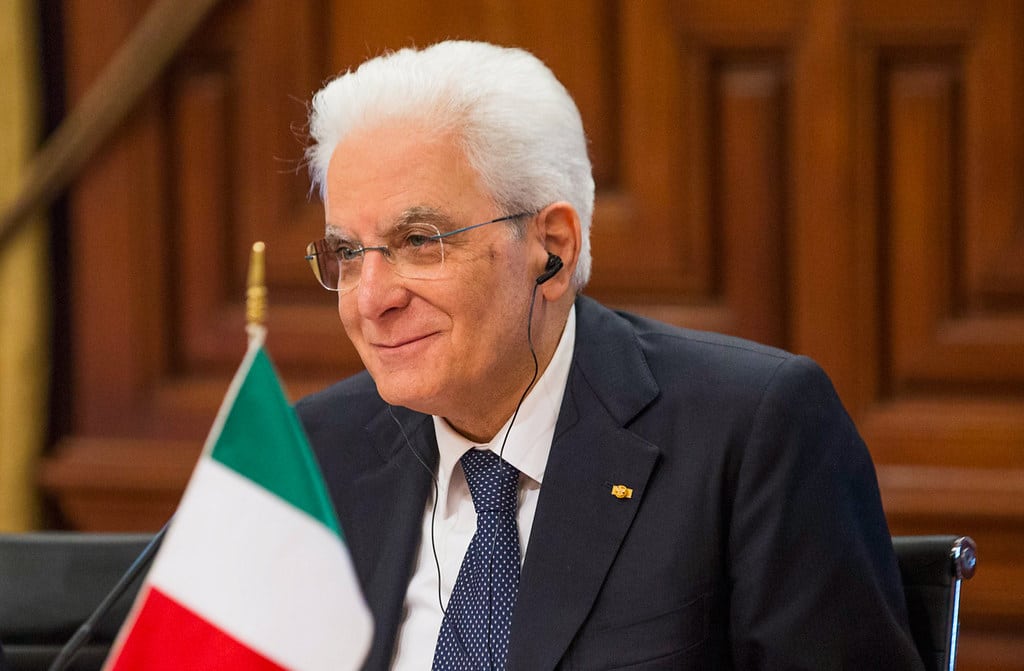
Italian President Sergio Mattarella is scheduled to pay a state visit to Cyprus on February 26 and 27. This visit will be the first by an Italian president since the establishment of diplomatic relations between Italy and Cyprus. Mattarella, who is the longest-serving president in the history of the Italian Republic, will be accompanied by representatives of the Italian government and a large delegation. Details about the program will be provided in the coming days.

Government , ‘has the will’ to implement reform

Government , ‘has the will’ to implement reform

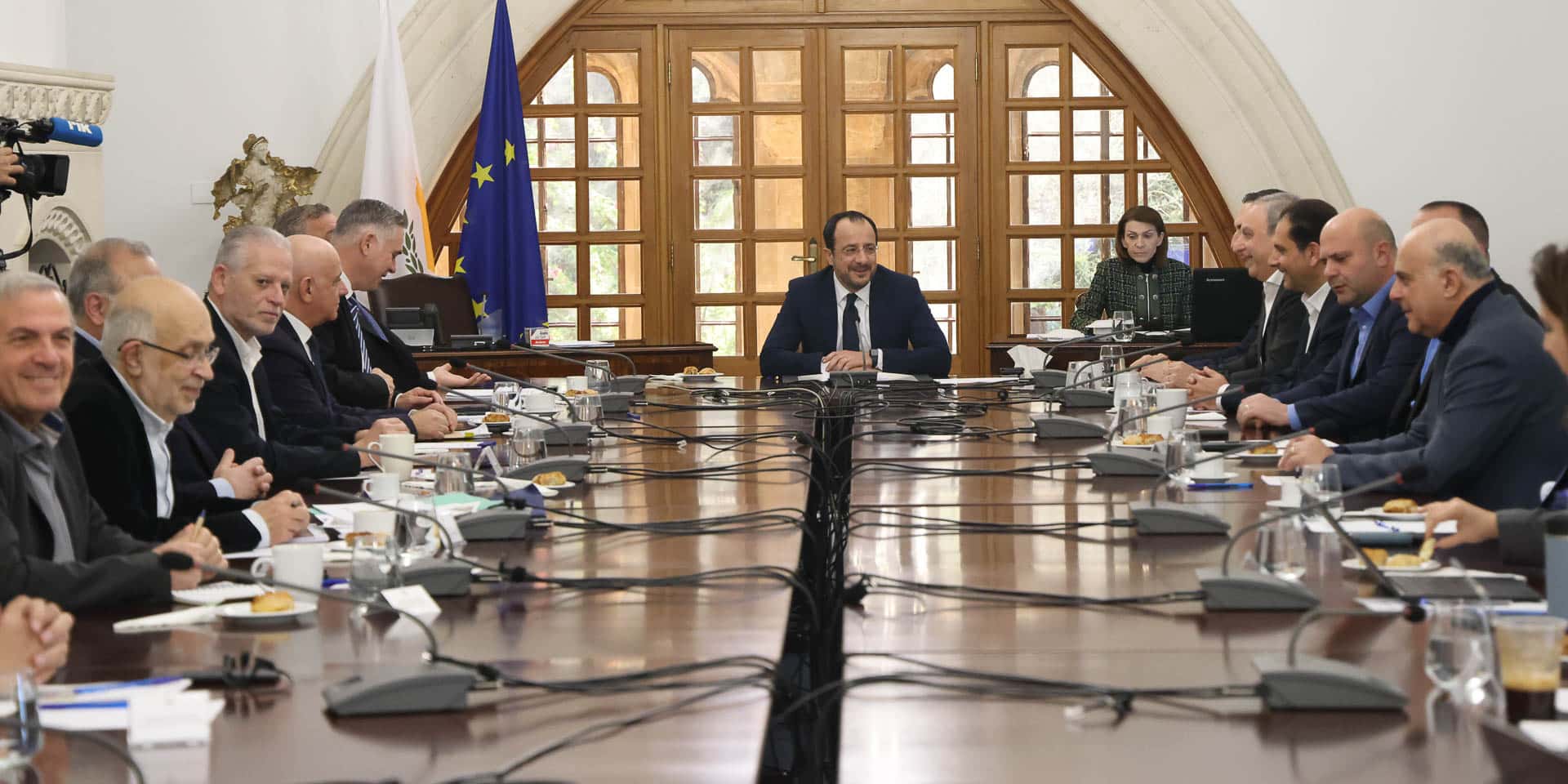
Interior Minister Constantinos Ioannou stated that challenges to the implementation of local government reform in Cyprus will be addressed with the assistance of parliament. A meeting on the issue was held with party leaders at the Presidential Palace, chaired by President Nikos Christodoulides. The government is committed to proceeding with the reform according to the existing legislation passed by the House. There are less than 100 days left until the reform’s implementation, and a road map has been prepared by the ministry.

The challenges include securing buildings for district self-governing authorities, staff training, and completing the ‘Evagoras’ data system software. The ministry’s role is supportive, particularly through the central advisory committee, assisting municipalities and elected officials with software, organizational charts, or budgets.

The president reiterated the government’s determination to implement the bill as passed. The legislation is acknowledged as not ideal, with problems identified and brought to parliament since the previous June. The ministry has hired 87 people to help simplify processes related to the reform. Concerns about the reform process exist, as is common with major reforms. The ministry cannot intervene directly to secure buildings for the reform but can pressure provisional councils. Despite not being ideal, the reform is considered better than the existing system, and the executive branch assures that it will implement the legislation as passed.

Swedish PM to visit Hungary before ratification of NATO bid

Swedish PM to visit Hungary before ratification of NATO bid

Fact: Swedish Prime Minister Ulf Kristersson is scheduled to travel to Budapest on Friday to meet Hungarian Prime Minister Viktor Orban before Hungary’s parliament votes on Sweden’s NATO membership bid the following Monday.

Fact: Sweden applied to join NATO nearly two years ago following Russia’s invasion of Ukraine.

Fact: Hungary is the last NATO member that has not ratified Sweden’s accession, with delays attributed to criticism from Sweden regarding Hungary’s rule of law.

Fact: Orban expressed it would be a pleasure to welcome Kristersson and mentioned plans to discuss defense and security policy cooperation, the Hungarian Presidency of the Council of the European Union, and the EU’s Strategic Agenda.

Fact: Orban’s Fidesz party, which has a significant majority in the Hungarian parliament, proposed a vote to ratify Sweden’s NATO membership for February 26 and indicated support for the motion.

Fact: The delay in ratification has affected Budapest’s relations with the United States and caused concern among allies.

Fact: The visit by Kristersson follows an invitation from Orban, and they plan to hold a joint press conference.

Fact: Hungary leases Gripen fighter aircraft from Sweden’s SAAB under a contract that was signed in 2001.

Fact: There are reports of a potential new defense deal between Sweden and Hungary, but a Hungarian government spokesman has not responded to inquiries.
Eni, Total confirm , ‘excellent’ natgas well at Cronos-2

Eni, Total confirm , ‘excellent’ natgas well at Cronos-2

Italy’s Eni and French TotalEnergies have confirmed the extension and excellent well deliverability at their joint natural gas field within the Cronos discovery in the Cyprus offshore exclusive economic zone. The Cronos-2 well was drilled to appraise the nearby Cronos discovery in Block 6, and it has high production capability estimated at over 150 million standard cubic feet per day of gas. Eni Cyprus Limited is the operator of Block 6 with a 50% participation, with partner TotalEnergies EP Cyprus B.V. holding the remaining 50%. The government’s main goal is to enable access to cheaper energy for Cypriot citizens. Cyprus is behind schedule in converting its infrastructure to import natural gas, resulting in significant carbon emission fines. Eni aims to tap into and export natural gas from the Cronos gasfields through a subsea pipeline to its Zohr field in Egyptian waters.

Christodoulides takes action on buffer zone fortifications

Christodoulides takes action on buffer zone fortifications

– President Nikos Christodoulides is taking measures to remove fortifications near the buffer zone built by the Turkish army.
– Dherynia Mayor Andros Karayiannis, who is also the head of the committee of rural and semi-rural municipalities, discussed the issue with Christodoulides.
– The issue of fortifications arose a few months ago after a Turkish violation in the buffer zone in Ayios Dhometios, Nicosia, where Turkish forces installed a camera on a house in the UN-controlled area.
– The fortification works are a concern for all buffer zone areas, especially the six municipalities near the area.
– Local authorities are requesting incentives from the interior ministry for housing projects in buffer-zone bordering areas to encourage people, particularly young people, to live there.
– The opening of the Pyrroi checkpoint was discussed, and Christodoulides stated he will not open any other checkpoint until Pyrroi is opened, in conjunction with the demands of Turkish Cypriots who want a checkpoint in Kaimakli for commercial purposes.
– Karayiannis expressed satisfaction with the meeting with the president and the interior minister.
– The new plan for rural, mountainous, and isolated areas will be announced in early March.
– The Yeri mayor requested that the checkpoint at Archaias Ledras near the village be investigated.
– Christodoulides showed interest in all topics raised by the buffer-zone municipalities.

Christodoulides takes action on buffer zone fortifications

Christodoulides takes action on buffer zone fortifications

President Nikos Christodoulides is taking measures to remove fortifications near the buffer zone built by the Turkish army. Dherynia Mayor Andros Karayiannis, who is also the head of the committee of rural and semi-rural municipalities, reported this after a meeting with Christodoulides. The issue of fortifications arose following a Turkish violation in the buffer zone in Ayios Dhometios, Nicosia, where Turkish forces installed a camera on a house within the UN-controlled area. The camera has not been removed.

Karayiannis had a constructive discussion with President Christodoulides and Interior Minister Constantinos Ioannou about the fortifications, which are a concern for the six municipalities near the buffer zone. Christodoulides acknowledged the challenge to the buffer zone by the occupying army and is taking steps to address the violation.

Local authorities are seeking incentives from the interior ministry for housing projects in buffer-zone bordering areas to encourage residency, particularly for young people. The opening of the Pyrroi checkpoint was also discussed, and Christodoulides stated he will not open any other checkpoint until the Pyrroi is opened, considering the demands of Turkish Cypriots for a commercial checkpoint in Kaimakli.

Karayiannis expressed satisfaction with the meeting’s outcomes. The government officials handle policy issues, but the municipalities have requested the announcement of housing plans for the buffer zone areas. Assurances were given that a new plan for rural, mountainous, and isolated areas would be announced in early March.

The Yeri mayor requested an investigation into the checkpoint at Archaias Ledras near the village. Christodoulides showed interest in all topics raised by the buffer-zone municipalities.

They’re changing directions, they should change behaviours as well

They’re changing directions, they should change behaviours as well

The initial finding of the Minister of Energy was a lack of cooperation among public entities managing energy matters. The Minister prioritized restoring cooperation with the Electricity Authority of Cyprus (EAC) and efforts were made to improve relationships. However, there were failures in cooperation between the EAC and the Cyprus Energy Regulatory Authority (CERA). The recent change in the board of directors of EAC is expected to improve cooperation. Concerns were raised about the potential influence of the dinner between the Minister, the president of CERA, and the new president of EAC. Unions of EAC targeted the president of CERA, accusing him of causing uproar over potential electricity price increases. The President of the Republic also played a role in the situation by sending a message to the new EAC board to avoid price increases. The unions’ statement did not contribute to rectifying the situation. The column hopes that the Minister’s policy directions for the role of EAC in the green transition and energy security will be adopted by other public players.

Greek farmers plan to rally in Athens next week

Greek farmers plan to rally in Athens next week

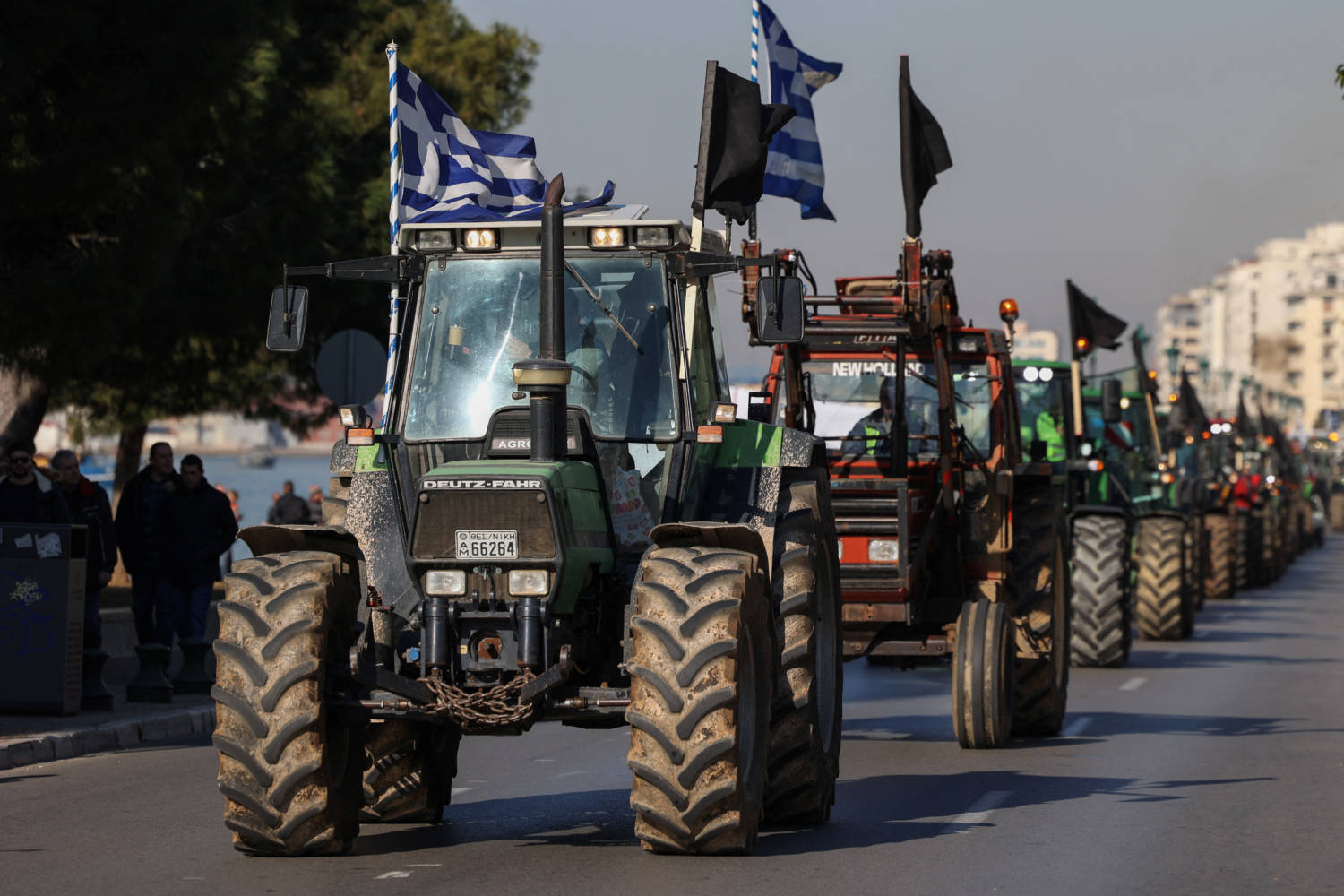
Greek farmers are planning to hold a rally in Athens to protest rising energy costs and competition from abroad. They have been protesting for weeks, blocking roads and border crossings with their tractors. The government has proposed support measures, including cheaper electricity and a tax rebate for agricultural diesel, but the farmers say it is not enough. They will hold a rally in Athens next week to further voice their grievances.

Putin says Russia is close to creating cancer vaccines

Putin says Russia is close to creating cancer vaccines

Russian President Vladimir Putin stated that Russian scientists are nearing the development of cancer vaccines and new generation immunomodulatory drugs, which he anticipates will soon be used effectively in individual therapy. He did not provide details on the specific types of cancer the vaccines would target. Various countries and companies, including the UK government in partnership with BioNTech and pharmaceutical companies Moderna and Merck & Co, are also working on cancer vaccines. There are existing licensed vaccines against HPV and HBV, which are known to cause certain cancers. During the COVID-19 pandemic, Russia developed the Sputnik V vaccine, which faced domestic reluctance despite Putin endorsing it by taking it himself.

Putin says Russia is close to creating cancer vaccines

Putin says Russia is close to creating cancer vaccines

Russian President Vladimir Putin stated that Russian scientists are nearing the development of cancer vaccines and new generation immunomodulatory drugs, which he anticipates will soon be used effectively in individual therapy. He did not provide details on the specific types of cancer these vaccines would target. Globally, there are efforts to develop cancer vaccines, with the UK collaborating with BioNTech on personalized cancer treatments, and companies like Moderna and Merck & Co working on a vaccine that has shown promise in reducing recurrence or death from melanoma. The World Health Organization recognizes six licensed vaccines against HPV, which causes several cancers including cervical cancer, and vaccines against HBV, which can lead to liver cancer. During the COVID-19 pandemic, Russia developed the Sputnik V vaccine, which faced public reluctance domestically despite Putin endorsing it by getting vaccinated himself.