Private lakes emerge as symbol of water inequity in elite Mexican holiday town
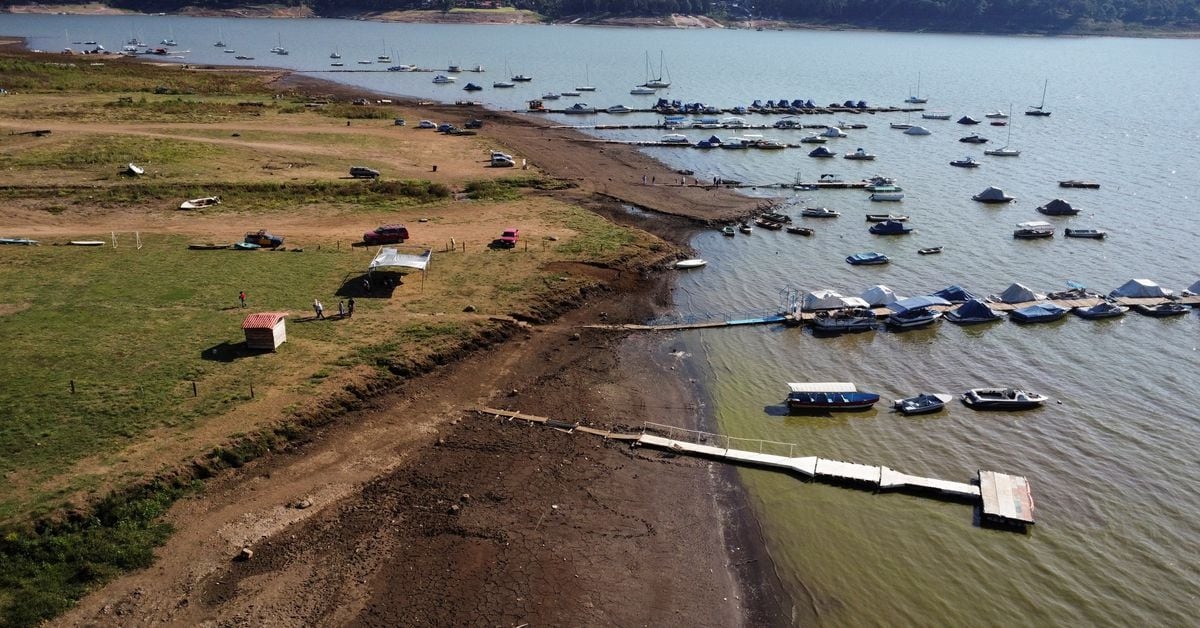
The shores of the giant dam in Valle de Bravo, a popular destination near Mexico City, have turned into cracked, dry mud due to the dam being at less than 32% of its capacity, a historic low. This dam is part of the Cutzamala System, which supplies water to about 6 million people in Mexico City and its surroundings. The area is experiencing a sharp decline in water levels, exacerbated by dwindling rainfall and a growing population. Despite this, there are hundreds of artificial lakes and dams within the properties of the wealthy in the area, which has sparked controversy over water access inequality. The decline in tourism has significantly affected locals’ income, and some neighborhoods in Mexico City have been without water for weeks. Factors contributing to the water scarcity include years of reduced precipitation, rapid development, deforestation, and the La Nina climate phenomenon, which resulted in a 12.8% rainfall deficit last year. Local efforts to address the issue face challenges, including a lack of federal support and unauthorized diversions for private lakes. A petition has been filed against the Mexican government under the Commission for Environmental Cooperation regarding these concerns.