EU seeks migration agreement with Lebanon

EU seeks migration agreement with Lebanon

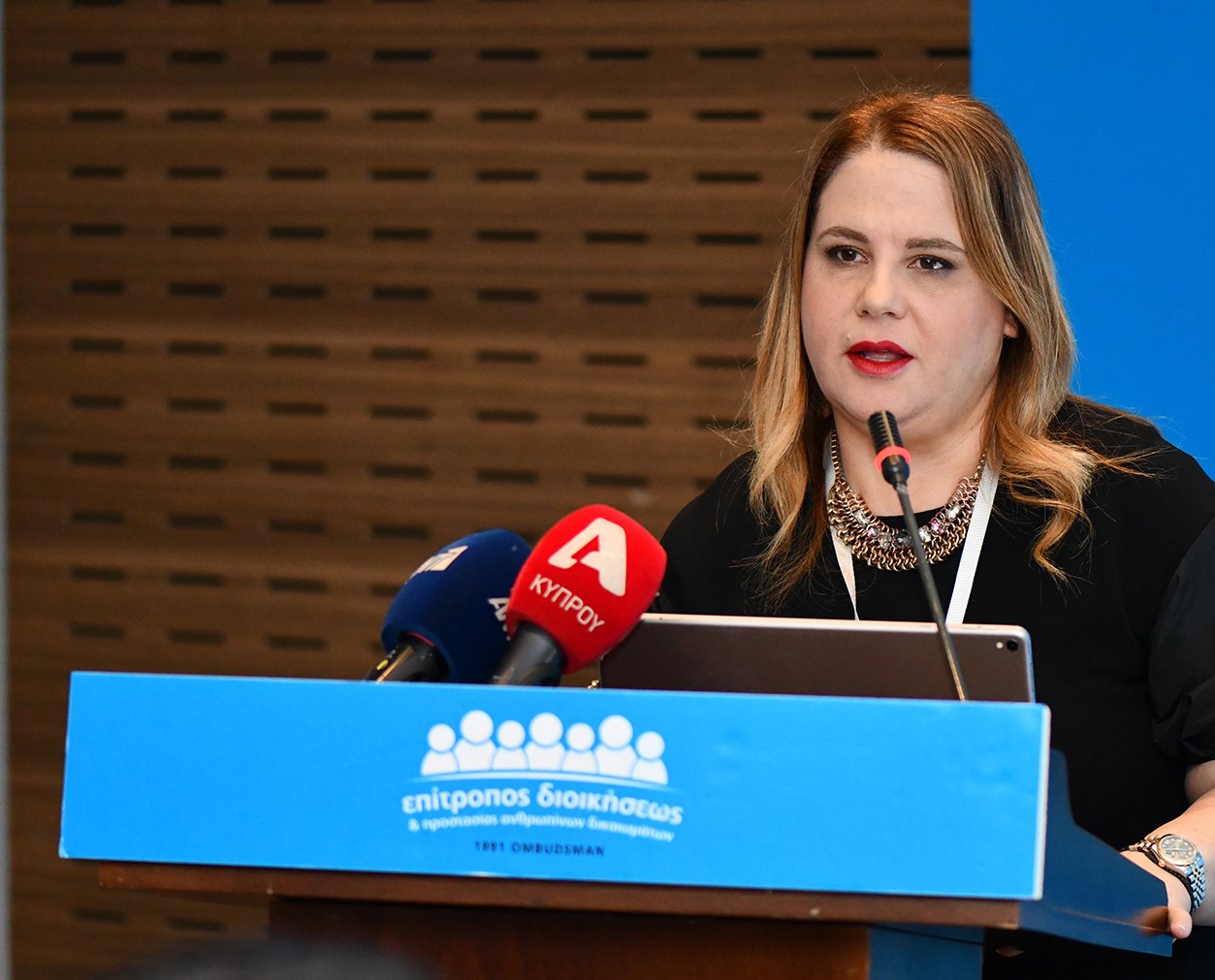
The European Union is aiming to reach a migration agreement with Lebanon, as stated by Margaritis Schinas, the Vice-President of the European Commission. This follows successful agreements with Egypt and Tunisia. Schinas emphasized the need for preparation and stabilization of the agreement’s parameters but expressed optimism about its feasibility. He also mentioned the ongoing process for re-evaluating certain areas in Syria as safe, a competence of the European Asylum Agency, and highlighted Cyprus’s significant success in increasing returns of migrants. The Cypriot Minister of Interior, Konstantinos Ioannou, discussed the geopolitical risks in the region, the role of the European Asylum Agency in assessing safety in Syria, and the efforts to combat human trafficking networks, including the establishment of a special police unit in Cyprus. The meeting in Nicosia also included other Cypriot ministers and deputy ministers.

Man injured in Mari blast awarded more damages

Man injured in Mari blast awarded more damages

A man injured by the 2011 Mari blast was awarded increased damages by the Supreme Court, raising his compensation for loss of future income from €20,000 to €60,000. The man suffered trauma to his ears, resulting in hearing loss in high frequencies and tinnitus, which was medically evaluated as permanent and irreversible on October 13, 2012. He also suffers from post-traumatic stress disorder, experiences anxiety, isolation, and has no future aspirations. The initial court decision in 2020 awarded him €100,000 in overall damages, with €80,000 for his pain and €20,000 for loss of future income, which was later increased. The Mari blast in July 2011 resulted in 13 deaths and 62 injuries. Defence Minister Costas Papacostas was sentenced in July 2013 to five years in prison for manslaughter and causing death by reckless or dangerous acts.

Focus on Cyprus on Against Racism Day

Focus on Cyprus on Against Racism Day

Human rights commissioner Maria Stylianou-Lottides emphasized that combating racism and promoting equality and mutual respect are collective responsibilities. She highlighted the importance of International Day Against Racism and Discrimination, observed on March 21, as a reminder for states to combat racism and xenophobia. Lottides mentioned the EU Agency for Fundamental Rights’ 2023 report “Being Black in the EU,” which indicates that people of African descent still face racism, discrimination, and hate crimes despite anti-discrimination laws in the EU. She also noted that racist incidents and xenophobic rhetoric have worsened in Cyprus, partly due to an increase in asylum seekers and economic difficulties. Examples of such incidents include a video from July 2022 showing a violent attack on an African woman with a baby, attacks against foreign food delivery drivers in Nicosia, and recent incidents in Chloraka and Limassol. Lottides called for prompt and decisive intervention by authorities to address racism effectively.

Anti-racism march takes place in Nicosia

Anti-racism march takes place in Nicosia

An anti-racism event was held in the old city of Nicosia on the occasion of the International Day for the Elimination of Racial Discrimination, which is observed annually on March 21. The event was organized by the Alliance Against the Far Right, Fascism, and Racism, with participation from Greek Cypriot and Turkish Cypriot political parties and organizations. Attendees included Akel’s General Secretary, Stefanos Stefanou, and the Green Party Leader, George Perdikis. The march started at Solomos Square and ended at Faneromeni Square, where an artistic program took place. Participants chanted slogans against racism and fascism. Marina Stavrinou-Koukou, a member of the alliance, stated the march aimed to highlight the importance of equality and the rights of all individuals, especially vulnerable groups, migrants, and those from diverse backgrounds. Koukou emphasized the worsening situation regarding the rise of the far right and inhumane ideologies, and the need for continued efforts towards human rights, equality in employment, and humane living conditions. She called on the state and government to support these efforts, highlighting the impact of racism and fascism on society. The alliance includes over 60 organizations, encompassing Greek Cypriot, Turkish Cypriot, and migrant groups.

UK plan to deport refugees to Rwanda to be delayed

UK plan to deport refugees to Rwanda to be delayed

The passage of British Prime Minister Rishi Sunak’s bill to deport refugees to Rwanda may be delayed until at least next month after the upper house of parliament demanded greater protections. The government aims to relocate thousands of asylum seekers who arrive in Britain on small boats each year to Rwanda, but legal challenges have prevented any deportations so far. The legislation is key to Sunak’s pledge to stop the arrival of asylum seekers, aiming to improve his Conservative Party’s standing in polls. The House of Lords voted to amend the legislation for more safeguards for asylum seekers, causing a delay in the bill becoming law until after parliament’s Easter break. The UK’s Supreme Court previously ruled the deportation policy unlawful due to risks to the deportees’ safety. Sunak’s government is attempting to pass the bill by declaring Rwanda a safe country for asylum seekers and modifying parts of human rights law to prevent legal challenges.

UN says Russia consolidates control of occupied Ukraine with , ‘climate of fear’

UN says Russia consolidates control of occupied Ukraine with , ‘climate of fear’

Russia is consolidating control over occupied Ukrainian territory through arbitrary detention, killings, and torture, creating a climate of fear. The U.N. Human Rights Monitoring Mission in Ukraine (HRMMU) reported on rights breaches by Russia, including censorship, surveillance, political oppression, repression of free speech, and movement restrictions. Russia denies committing atrocities or deliberately attacking civilians, calling its actions a “special military operation.” Russia controls over 17% of Ukraine’s territory, affecting several million people. The HRMMU’s findings are based on interviews with over 2,300 individuals. Initial rights violations involved killings, torture, and arbitrary detention, targeting those linked to Ukrainian security forces or supportive of Ukraine. This was followed by restrictions on movement, assembly, and expression, and efforts to replace Ukrainian state institutions with Russian ones, violating international humanitarian law. Schools were forced to adopt the Russian language and curriculum, and the justice system jailed people in Russian prisons. Civil servants were compelled to comply with new systems. At the Zaporizhzhia nuclear power plant, workers faced threats, intimidation, and arbitrary arrest if they resisted. Russia also pushed for residents to take Russian citizenship, linking access to services like healthcare and social security to holding a Russian passport. Residents were encouraged to spy on each other, and communication links between Ukrainians in occupied areas and those in territories controlled by Kyiv were cut, isolating families.

In Gaza, starving children fill hospital wards as famine looms

In Gaza, starving children fill hospital wards as famine looms

Six-year-old Fadi al-Zant from Gaza is acutely malnourished, unable to walk, and suffers from cystic fibrosis. His health has deteriorated since the conflict began, as his medication is no longer available and his diet has been severely restricted. The Kamal Adwan hospital, where Fadi is being treated, has seen most of the 27 children who have died from malnutrition and dehydration recently. The Integrated Food Security Phase Classification (IPC) warns that famine is imminent in northern Gaza, affecting over two-thirds of the people there. Despite Israel’s claims of not limiting aid, shortages of food, medicines, and clean water persist. Fadi’s condition worsened about two months ago, with his weight dropping from 30kg to 12kg. The U.N. children’s agency UNICEF reports nearly 1 in 3 children under two in northern Gaza suffer from acute malnutrition. Human Rights Watch accuses Israel of obstructing the provision of basic services and lifesaving aid, which Israel denies. Conditions in Gaza have been exacerbated by disease, with a significant increase in diarrhoea cases among children under 5, further hastening malnutrition.

Washington makes new push for Gaza ceasefire to head off famine, Rafah assault

Washington makes new push for Gaza ceasefire to head off famine, Rafah assault

– The United States is pushing for a ceasefire in Gaza to prevent a famine and is urging Israel not to launch a ground assault on Rafah, where over a million displaced people are taking refuge.
– Secretary of State Antony Blinken is planning a trip to the Middle East to meet leaders of Egypt and Saudi Arabia to discuss peace, but no visit to Israel has been announced.
– Israeli air strikes in Rafah killed 14 people, and Gaza’s food shortages have surpassed famine levels according to the international hunger monitor.
– Israel denies causing Gaza’s hunger, claiming it is opening new routes for aid and that U.N. and other agencies should distribute food more effectively.
– The U.N. suggests Israel’s restrictions and conduct in the conflict could constitute a war crime.
– Ceasefire talks are resuming in Qatar, with discussions around a six-week truce that would involve the release of hostages and detainees and the provision of aid to Gaza.
– The humanitarian situation in Gaza and the potential assault on Rafah have caused tension between the Israeli government and the U.S. administration.
– White House National Security Advisor Jake Sullivan expressed that a ground operation in Rafah would be a mistake and that Israel’s goals can be achieved by other means.
– Israel insists a ground assault is necessary to defeat Hamas in Gaza, including in Rafah.
– Hamas reported the death of a senior police commander and his family in northern Gaza due to overnight air strikes.
– Israel aims to continue its military operations in Gaza until Hamas is defeated and claims to have killed senior Hamas officials, including the deputy commander of the Hamas military wing.
– Talks hosted in Qatar between Israel and Hamas are ongoing, with hopes for a truce that would benefit over two million people in Gaza.

Israel’s restrictions to Gaza aid may be war crime, says UN rights office

Israel’s restrictions to Gaza aid may be war crime, says UN rights office

Israel’s restrictions on humanitarian aid for Gaza might constitute a war crime due to potential starvation tactics, as stated by the U.N. human rights chief, Volker Turk. A U.N.-backed report warned of a possible famine in Gaza by May if the conflict between Israel and Hamas continues. Israel, however, claims it is facilitating aid delivery and blames the U.N. and relief groups for any issues related to aid distribution. The Israeli diplomatic mission in Geneva asserted that Israel is actively working to provide Gaza with aid through various means. The U.N. High Commissioner emphasized Israel’s obligations as the occupying power to ensure food and medical care for Gaza’s population and support humanitarian organizations in their aid delivery efforts. The report highlighted severe malnutrition and food insecurity in northern Gaza, with people resorting to eating bird seeds, animal fodder, wild grass, and weeds due to the lack of food. Turk described the crisis as “human-made” and called for international pressure on Israel to allow full aid delivery and restore essential services in Gaza.

Russia systematically tortures Ukraine POWs, UN commission says

Russia systematically tortures Ukraine POWs, UN commission says

A United Nations commission of inquiry on Ukraine reported that Russia has systematically tortured Ukrainian prisoners of war, including threats of rape and electric shocks on genitals. The commission described these acts as “widespread and systematic,” potentially amounting to crimes against humanity. The report highlighted severe and brutal treatment of detainees, leading to significant pain and suffering. Despite Russia’s denial of such actions, the U.N. Human Rights Council in Geneva, which received the report, will consider extending the commission’s mandate. The commission also noted instances of ill-treatment by Ukrainian forces, which Kyiv has pledged to investigate. Additionally, the report detailed extreme conditions in Russian detention centers, including prisoners resorting to eating soap, worms, and leftover dog food. One Ukrainian soldier experienced severe beatings, leading to significant health issues and multiple hospitalizations. The commission’s chair, Erik Møse, emphasized the need for further investigation to establish these acts as part of Russian policy, while Germany’s ambassador called for accountability. Ukraine’s ambassador urged for the extension of the commission’s mandate to gather more evidence for potential use in legal proceedings.