Getting tougher on naturalisation

Getting tougher on naturalisation

The new requirements for applying for Cypriot nationality include: living in Cyprus for 12 months continuously before the application submission (with a permissible absence of up to 90 days), being of good character, having sufficient knowledge of the Greek language (proven by a written examination), demonstrating knowledge of local political and social realities (assessed by a 3-member committee), having suitable accommodation and stable financial resources, intending genuinely to reside in Cyprus, and excluding asylum seekers or holders of international protection, and foreign students from the time of stay calculation. Failure to meet any of these conditions results in application rejection. The requirements have retrospective effect, applying even to applications submitted before the law amendment in March 2024. Exceptions are made for Ireland and Denmark within the EU. Highly skilled foreign workers can obtain citizenship after residing in Cyprus for four to five years, depending on qualifications, and must pass a Greek language test at level B1 for a five-year stay or A1 for a four-year stay, without needing to pass history/culture tests.

Resistance to reforms in EU must be dealt with

Resistance to reforms in EU must be dealt with

The main challenges facing the EU include sluggish growth, low investment levels, slow technology adaptation, tight labour markets, and over-reliance on conventional energy sources, leading to inflationary pressures and a lack of consensus on fiscal policy direction. Cyprus has satisfactory short- and medium-term economic performance but faces long-term challenges like low productivity, investment, chronic balance of payments deficits, and delays in green and digital transitions. The EU and Cyprus need to accelerate reforms and increase investments, supported by the Resilience and Recovery Fund. The European Commission is assessing the effectiveness of national resilience and recovery programs, with preliminary results showing significant fund absorption but underachievement in reform objectives, partly due to resistance to structural reforms and transitions. Immigration, under the right conditions, is seen as necessary for addressing labour shortages but has led to societal challenges and the rise of populist movements. Other factors contributing to reform resistance include the time it takes for reforms to show results and the sense of insecurity radical changes can cause. Recommended policy approaches include designing comprehensive policies, focusing on transparency and communication, and taking compensatory measures to support vulnerable populations. The EU’s fiscal policy framework needs adaptation to current circumstances to ensure reform success.

The fifth freedom: Corporate mobility within the EU

The fifth freedom: Corporate mobility within the EU

The text discusses the impact of Directive (EU) 2019/2121, which amends Directive (EU) 2017/1132, on the legal and business environment in Cyprus. This Directive enhances the mobility of companies within the EU internal market by facilitating cross-border conversions, mergers, and divisions, thus acting as an extension of the freedom of establishment. It aims to promote economic growth, competitiveness, and stability within the European single market by harmonizing rules and procedures across member states. The Directive includes provisions to protect the interests of shareholders, employees, and creditors during cross-border operations. Its implementation in Cyprus is expected to increase cross-border business activity, enhance competitiveness, improve legal certainty, and ensure stakeholder protections, but it may also present challenges in terms of compliance and adaptation for Cypriot companies. The text also notes that the existing Companies Law in Cyprus, CAP 113, already regulates cross-border mergers and the transfer of company seats in line with the Directive, but the new provisions on cross-border divisions represent a significant development for the Cyprus legal corporate system.

EU seeks migration agreement with Lebanon

EU seeks migration agreement with Lebanon

The European Union is aiming to reach a migration agreement with Lebanon, as stated by Margaritis Schinas, the Vice-President of the European Commission. This follows successful agreements with Egypt and Tunisia. Schinas emphasized the need for preparation and stabilization of the agreement’s parameters but expressed optimism about its feasibility. He also mentioned the ongoing process for re-evaluating certain areas in Syria as safe, a competence of the European Asylum Agency, and highlighted Cyprus’s significant success in increasing returns of migrants. The Cypriot Minister of Interior, Konstantinos Ioannou, discussed the geopolitical risks in the region, the role of the European Asylum Agency in assessing safety in Syria, and the efforts to combat human trafficking networks, including the establishment of a special police unit in Cyprus. The meeting in Nicosia also included other Cypriot ministers and deputy ministers.

Cyprus , ‘under suffocating pressure’ from migrant arrivals

Cyprus , ‘under suffocating pressure’ from migrant arrivals

Cyprus has been described by European Commission Vice President Margaritis Schinas as “emerging as a European champion of returns” of migrants. Schinas highlighted the complexity and difficulty of managing migration in Cyprus but affirmed the EU’s unwavering support for the country in this regard. Despite the positive outlook from Schinas, Interior Minister Constantinos Ioannou expressed concerns over the “suffocating pressure” from the influx of Syrian migrants arriving by sea, although he noted that the flow of migrants from sub-Saharan Africa has been largely limited. Ioannou has proposed a plan to the European Union to declare parts of Syria safe for the return of migrants, a plan that has received support from the Austrian government and, despite a misunderstanding, was initially thought to have the backing of the Swedish government. Ioannou also mentioned the challenges posed by organized trafficking rings and the steps taken to combat them, including the establishment of a special police unit. Additionally, he referred to an agreement signed between the EU and Egypt aimed at addressing the root causes of irregular migration and enhancing legal immigration pathways. Schinas mentioned the EU’s efforts to pressure airlines involved in irregular migration and the provision of over €250 million in funding for Cyprus’ immigration infrastructure.

Western banks warn of risks in EU plan to grab Russian assets, sources say

Western banks warn of risks in EU plan to grab Russian assets, sources say

Western banks are lobbying against EU proposals to redistribute billions of euros in interest earned on frozen Russian assets due to fears of costly litigation. EU leaders have agreed to work on a plan to use up to 3 billion euros a year to supply arms to Ukraine, funded by the interest from these assets. Banks are concerned about potential liability from Russia, the erosion of trust in the western banking system, and the legal implications of transferring money to Ukraine. Euroclear holds 190 billion euros of Russian central bank securities and cash, and more than 3.5 million Russians have frozen assets abroad worth around 1.5 trillion roubles. The EU plan includes paying a fee to Euroclear and allowing it to retain 10% of the profits as a safeguard against litigation. Ninety percent of the seized cash would be used to buy arms for Ukraine, with the rest for recovery and reconstruction. The proposal has raised concerns about the legal risks for banks and the potential for prolonged international legal disputes.

Explainer: How will the West use Russia’s frozen assets?

Explainer: How will the West use Russia’s frozen assets?

The European Union is expected to move closer to seizing profits from approximately 0 billion worth of Russian assets frozen since the invasion of Ukraine in February 2022. EU leaders aim to send confiscated money to Ukraine, facing complex legal challenges. Options include siphoning off proceeds from matured assets held mainly in Euroclear, confiscating Russian reserves under international law, issuing “reparation bonds” tied to war reparations from Russia, and arranging a syndicated loan where allies could use frozen assets to pay off loans if Moscow refuses to pay damages. The EU estimates it could send Ukraine 2.5 to 3 billion euros annually from seized profits. Belgium plans to send 1.5 billion euros to Ukraine immediately from taxed profits. Euroclear will retain a portion of the profits for operational and litigation costs. There are concerns about potential legal challenges from Russia and the impact on international asset holdings in Europe.

Christodoulides to address college during official meetings in Belgium

Christodoulides to address college during official meetings in Belgium

President Nikos Christodoulides of Cyprus is visiting Bruges, Belgium, to address the College of Europe on invitation by the Cypriot students association during the national week dedicated to Cyprus. This marks the first visit by a Cypriot President to the college. Christodoulides will be greeted by Rector Federica Mogherini, speak to students and academics, and meet with Vice-President of the European Commission, Margaritis Schinas. His agenda also includes participating in European People’s Party deliberations, discussing global issues with UN Secretary General Antonio Guterres and EU heads of state, and attending the 30th anniversary of the European Economic Area. Christodoulides will have another meeting with Guterres and will return to Cyprus on Friday evening.

The Fed, the whole Fed and nothing but the Fed

The Fed, the whole Fed and nothing but the Fed

– The USD Index (DXY) reached three-week highs past the 104.00 mark on Tuesday, despite a decline in US yields.
– The Federal Reserve’s interest rate decision and the FOMC Economic Projections, along with Chair Jerome Powell’s press conference, are scheduled for Wednesday.
– The EURUSD pair fell to multi-week lows near the 1.0830 region, testing the critical 200-day SMA.
– ECB’s Christiane Lagarde is set to speak on Wednesday, and the European Commission will release its flash Consumer Confidence gauge.
– The GBPUSD pair moved beyond 1.2700 towards the end of the NA session on Tuesday after reversing an earlier pullback to the 1.2670 zone.
– The UK will report the Inflation Rate on March 20.
– The USDJPY pair approached the 151.00 mark, near 2024 highs, due to increased selling pressure on the yen following the BoJ rate hike.
– The AUDUSD pair approached the 0.6500 support level for the fourth consecutive session, influenced by a stronger USD and the RBA’s dovish stance. The RBA’s Consumer Inflation Expectations are due on March 20.
– WTI oil prices surpassed .00 per barrel, reaching four-month highs, driven by geopolitical factors and anticipated stronger demand.
– Gold prices saw modest losses around the ,150 per troy ounce zone, affected by the stronger Dollar and lower US yields.
– Silver prices dropped for the second consecutive session after reaching highs near .50 per ounce on Friday.

MPs hear LNG grant could be lost

MPs hear LNG grant could be lost

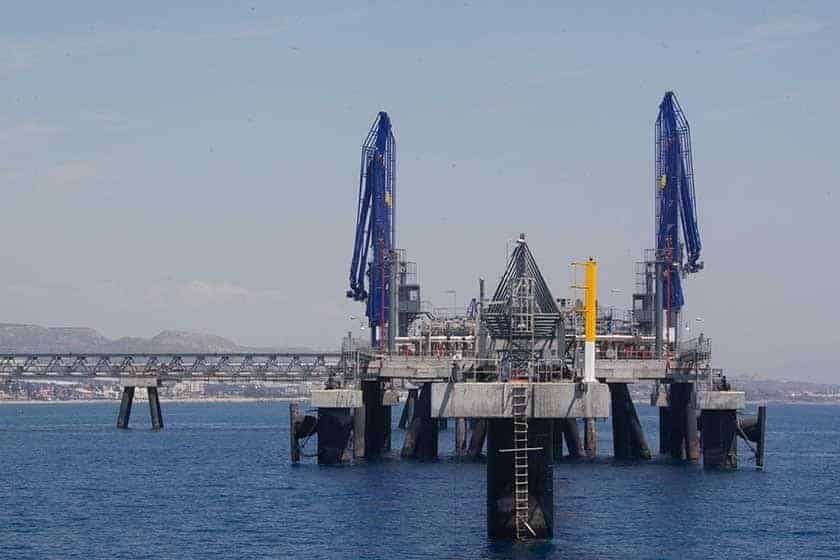
Cyprus risks losing part or all of an EU grant for the liquefied natural gas (LNG) terminal in Vasiliko due to not meeting certain requirements. The LNG terminal project is 80% complete, with the floating, storage, and regasification unit at 97% and the land-based infrastructures at 50%. Cyprus has received two extensions from the European Commission for the project, with the latest extension expiring at the end of 2024. To receive the remaining €28.9 million of the €101 million grant, Cyprus must have €253 million in recognized expenditures for the terminal by the end of 2023 and complete the project with the necessary certification by the end of 2024. Failure to meet these conditions could result in losing 20% of the remaining EU grant or more.